

Not long ago, concert lighting was mostly about visibility. A handful of static spotlights, maybe a basic color wash, and enough brightness to make sure the audience could see who was on stage. Early concert lighting design served a purpose, but it rarely played a creative role in the performance itself.
That has completely changed.
Today, lighting is part of the show. Modern lighting for concerts shapes emotion, builds anticipation, and turns music into a fully immersive experience. The best concert light shows aren’t remembered just for how bright they were—but for how they moved, breathed, and reacted to the music.
This shift has transformed concert stage lighting design into a discipline that blends creativity with technical precision. Lighting designers now think like storytellers, using movement, color, and timing to support the artist’s vision.
Intelligent Fixtures and the Rise of Laser Stage Lighting
The introduction of intelligent lighting fixtures marked a turning point for live events. Moving heads, programmable LEDs, and eventually laser stage lighting gave designers tools that could respond to music in real time.
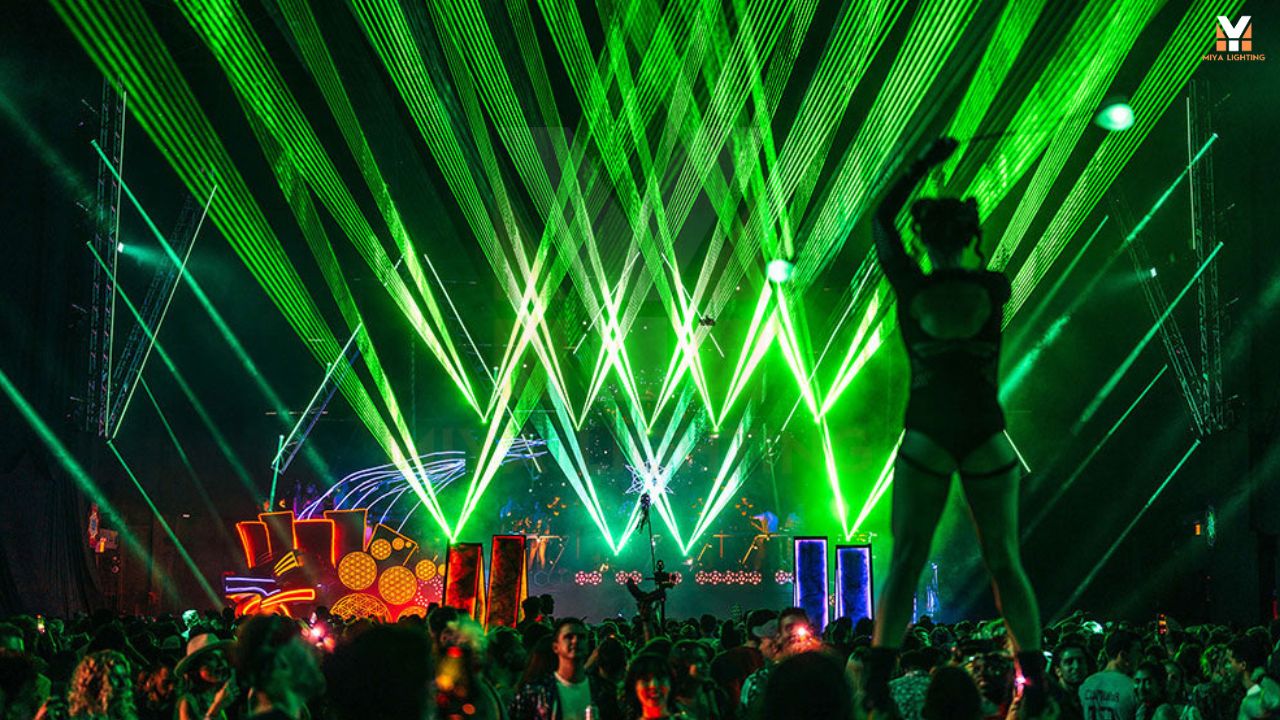
Lasers, in particular, brought something new to the stage. Unlike conventional fixtures, a laser show system produces highly focused beams that stay tight over long distances. When paired with haze or atmospheric effects, laser stage lighting creates crisp aerial lines that cut cleanly through space.
This is why modern professional concert lighting setups often combine multiple layers—LED washes for mood and coverage, moving heads for motion, and lasers for those high-impact moments that stop the crowd in its tracks.

Why Control Matters More Than Raw Brightness
One of the biggest misconceptions in live production is that brighter lights automatically mean better results. In reality, successful concert stage lighting depends on control.
Control over color consistency.
Control over movement speed.
Control over when and where attention is directed.
This is where concert lighting design software and advanced control systems become essential. Designers rely on DMX, timecode, and laser programming to lock lighting cues precisely to the music. Many teams keep a detailed concert light control journal to track cue timing, transitions, and programming logic—especially on touring productions where repeatability matters.
Great lighting doesn’t feel random. It feels intentional.
The People Behind the Light
When newcomers ask, “Which of the following is a critical member of the lighting design team?” the real answer is simple: all of them.
A strong lighting setup depends on collaboration. The lighting designer defines the creative direction. Programmers translate that vision into executable cues. Operators bring it to life night after night. Rigging teams ensure everything is safe, efficient, and reliable.
Another common question—“Which of the following concepts are the focus of a lighting designer?”—gets to the heart of the craft. Designers think about visibility, atmosphere, emotional flow, and how light interacts with both performers and the audience. Technology supports those goals, but creative intent always comes first.

Touring Lighting vs. Installed Systems
Concert tour lighting comes with its own set of challenges. Touring rigs must be powerful, flexible, and fast to deploy. A well-designed concert lighting rig can scale up for festivals or down for smaller venues without losing visual impact.
Permanent installations, on the other hand, prioritize longevity and integration. Clubs and theaters often rely on a mix of new and used concert lighting fixtures that are proven, reliable, and compatible with existing infrastructure.
In both cases, lasers have become a valuable tool. Compact laser projectors allow designers to achieve consistent, dramatic looks without adding excessive weight or setup time.
Lasers as a Signature Visual Element
Some of the most memorable moments in modern live music come from laser effects. A sudden fan of beams over the crowd. A geometric burst synced perfectly to a drop. A slow, sweeping motion that fills the room during a breakdown.
Many of today’s best concert light shows use lasers sparingly but purposefully. Unlike LED beams, laser light doesn’t soften over distance. That makes it especially effective in large venues and outdoor stages where traditional fixtures can lose intensity.
A well-designed laser show system for laser stage lighting doesn’t overpower the performance—it enhances it, giving the show a distinct visual identity.

Concert Lighting Ideas That Actually Work Live
Not every idea that looks impressive in a render works in a real venue. The most effective concert lighting ideas consider how audiences perceive space, movement, and rhythm.
Designers often start simple: strong backlight for silhouettes, controlled front light for visibility, and movement that follows the music rather than fighting it. Lasers are used as accents, not constant effects, so their impact feels deliberate instead of overwhelming.
This approach is what separates thoughtful professional concert lighting from setups that feel busy but unfocused.

Why Laser Lighting Is Now Essential for Modern Concerts
As audience expectations continue to rise, lasers are no longer just a bonus effect. They’ve become a core part of contemporary concert stage lighting design, especially in electronic music, pop tours, and large-scale productions.
Lasers offer precision, efficiency, and visual clarity that’s difficult to replicate with any other technology. When used with intention, they help designers create moments that feel bigger, sharper, and more immersive—without complicating the rig.

Final Thoughts
Great concert lighting doesn’t steal attention from the music—it amplifies it. Whether you’re building a small indoor setup or planning a full concert tour lighting system, the goal is the same: guide emotion, control energy, and create moments the audience remembers.
By combining intelligent LEDs, precise control systems, and carefully deployed laser stage lighting, designers can turn live performances into experiences that feel cohesive, immersive, and unforgettable.
At MIYA, we see laser lighting not just as an effect, but as a creative language—one that, when used thoughtfully, helps concerts leave a lasting impression long after the final note fades.


Leave a comment
This site is protected by hCaptcha and the hCaptcha Privacy Policy and Terms of Service apply.