
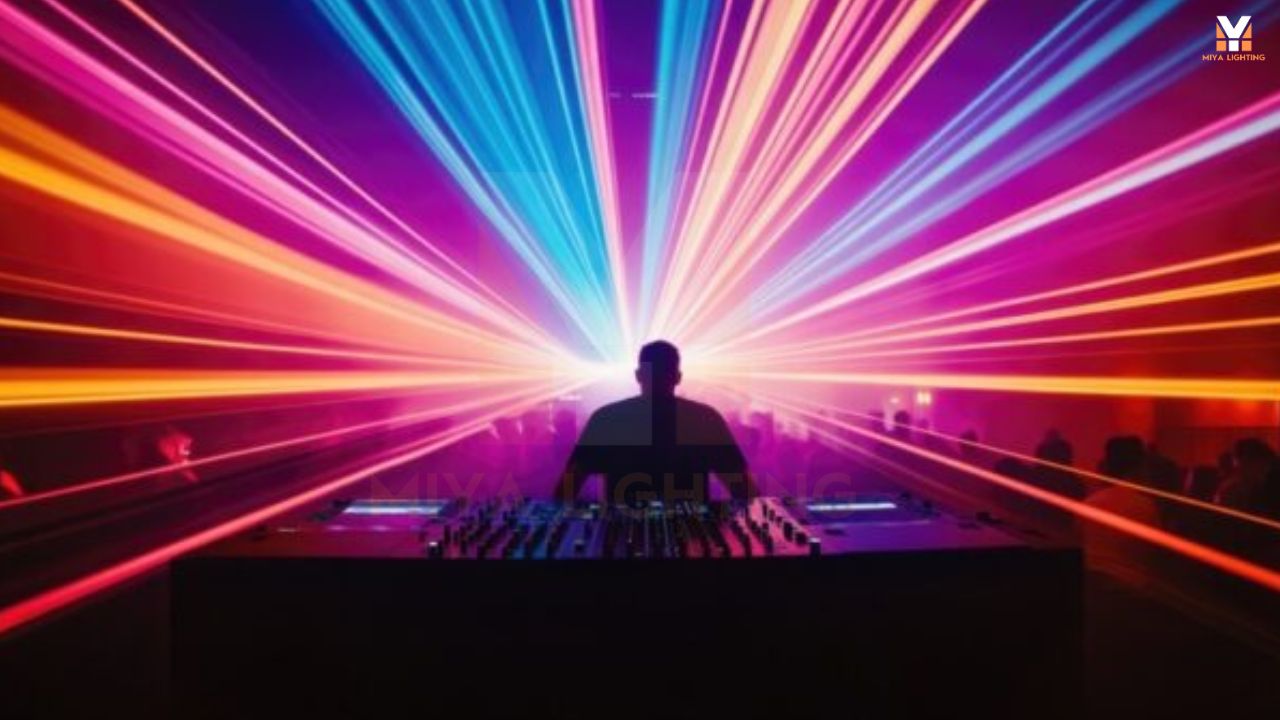
Audience scanning has long been one of the most debated topics in professional laser lighting. In modern event lighting, laser effects are expected to be immersive, precise, and visually striking—but they must also meet real-world safety and reliability requirements. For buyers evaluating laser systems for concerts, clubs, theaters, or permanent installations, understanding what audience scanning actually involves is essential.
This article addresses common misconceptions surrounding audience scanning laser effects and explains how professional laser systems are designed to operate responsibly. Rather than promoting extreme visuals, the focus here is on helping buyers make informed decisions when selecting professional laser lights for real production environments.
What Audience Scanning Means in Professional Use
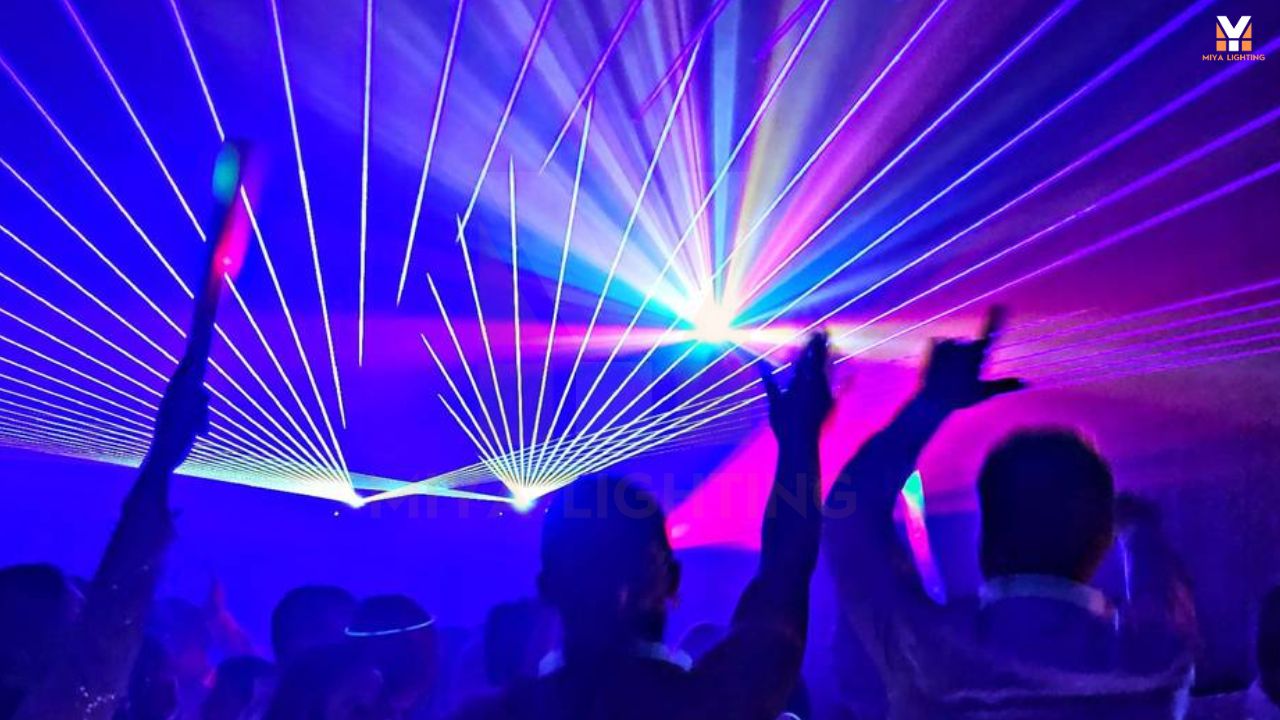
Audience scanning—sometimes referred to as crowd scanning laser effects—describes laser visuals that intentionally enter occupied spaces rather than remaining strictly above head height. These effects are commonly discussed in the context of concert lights, DJ lighting, and large-scale stage lighting designs where immersion plays a central role.
It’s important to understand that audience scanning is not a single effect type. It can include wide scanned fans, tunnels, soft geometric patterns, or controlled low-energy sweeps. The safety and suitability of any scanning laser effect depends on how beam power, divergence, scan speed, and projection geometry are managed together.
Professional designers do not think in terms of “on or off” scanning. Instead, they evaluate how energy is distributed over time and space, ensuring effects remain predictable and repeatable.

Myth 1: All Audience Scanning Laser Effects Are Unsafe
This is one of the most common misconceptions.
An audience scanning laser effect is not automatically unsafe. Risk is determined by whether exposure levels remain below Maximum Permissible Exposure (MPE) limits and whether the laser system behaves consistently. When designed correctly, certain scanned effects can be engineered to remain within acceptable thresholds.
Problems arise when scanning effects are used without understanding beam behavior, or when equipment lacks the precision required for professional environments such as theater lights, disco lights, or touring productions.
Myth 2: Scan-Fail Protection Alone Makes Scanning Safe
Scan-fail detection is an important feature in professional laser lights, but it is often misunderstood.
A scan-fail system is designed to shut down output if scanning stops or behaves abnormally. It does not measure audience distance, venue size, or how a specific rgb laser beam interacts with the environment. Even high-quality scan-fail systems rely on proper configuration by the operator.
Responsible use means combining hardware protection with informed design—not relying on a single safety feature.

Myth 3: There Is a Universal “Safe Distance”
Claims such as “audience scanning is safe beyond 10 meters” oversimplify laser physics.
While laser intensity does decrease with distance, many beams used in modern stage lighting remain concentrated enough to exceed exposure limits far beyond commonly cited distances. Beam divergence, power level, and scan geometry all influence hazard distance.
Professional designers sometimes use optical techniques to increase divergence, but these methods require precise control and stable hardware.
Myth 4: Faster Scanning Automatically Reduces Risk
Increasing scan speed can reduce perceived brightness, but it does not automatically ensure safety. Faster scanning mainly affects aesthetics, not exposure limits.
Even continuously moving effects—such as tunnels or fans—can deliver excessive energy if power and beam size are not controlled. This applies equally to high-impact concert lights and more subtle DJ lighting environments.

Myth 5: Only Static or Finger Beams Are Dangerous
Static beams and so-called finger lasers are among the highest-risk effects, but moving patterns are not inherently safe.
Dynamic scanning effects reduce risk compared to stationary beams, but not nearly as much as many assume. A poorly designed moving effect can still exceed safe exposure levels, especially in smaller venues.
This is why professional laser design focuses on energy management rather than movement alone.
Lasers vs Other Bright Stage Lighting
High-output LEDs used in event lighting can produce glare and discomfort, but lasers behave differently due to their coherence and low divergence. Laser beams concentrate energy far more efficiently, which is why exposure limits are much stricter.
This does not make lasers unsuitable—it simply means they demand higher precision and better engineering than conventional disco lights or wash fixtures.

Color, Wavelength, and RGB Considerations
Most modern laser systems use rgb laser modules to create full-color effects. While thermal effects dominate most exposure scenarios, shorter wavelengths—especially blue—also introduce photochemical considerations.
Professional systems balance output across red, green, and blue channels to maintain visual quality without unnecessary risk.

Designing Responsible Effects with Professional Equipment
Well-designed audience scanning effects are possible, but they rely on stable hardware, accurate scanning, and realistic expectations. These effects often appear cleaner and more refined than aggressive online demonstrations, but they perform better in real venues.
This is where equipment choice matters.
For example, the MIYA MY2-A Series 3–12W Outdoor Stage Laser Projector is engineered for predictable, professional operation. With true RGB analog modulation and 40Kpps scanning, it supports smooth laser animation, clean text, and even 3D animation laser light effects without erratic beam behavior.
Its IP65 waterproof design makes it suitable for outdoor installations, holiday displays, and permanent architectural projects, while support for DMX laser, ILDA, auto, sound, and app control via LightELF ensures flexibility across different event lighting scenarios.
Rather than encouraging extreme crowd scanning, systems like the MY2-A Series give designers the tools to shape laser effects responsibly—whether used in concerts, outdoor landmarks, or controlled stage environments.
What Buyers Should Look for in Laser Systems
Buyers evaluating laser equipment should prioritize engineering quality over headline wattage. Stable output, accurate scanning, thermal management, and clear documentation are far more important than raw power alone.
Reliable professional laser lights allow designers to work within known limits instead of guessing—an essential factor for long-term installations and touring productions alike.

Final Thoughts
Audience scanning is neither a shortcut nor a marketing trick. It is a specialized application that requires technical understanding, responsible design, and properly engineered laser systems.
For buyers, choosing stable, well-documented equipment is the foundation of safe and effective laser use. When designed and deployed correctly, laser lighting enhances concerts, clubs, and events without compromising professionalism or trust.
Understanding how audience scanning laser effects actually work helps ensure your investment delivers consistent results—not just impressive demos.


Leave a comment
This site is protected by hCaptcha and the hCaptcha Privacy Policy and Terms of Service apply.