
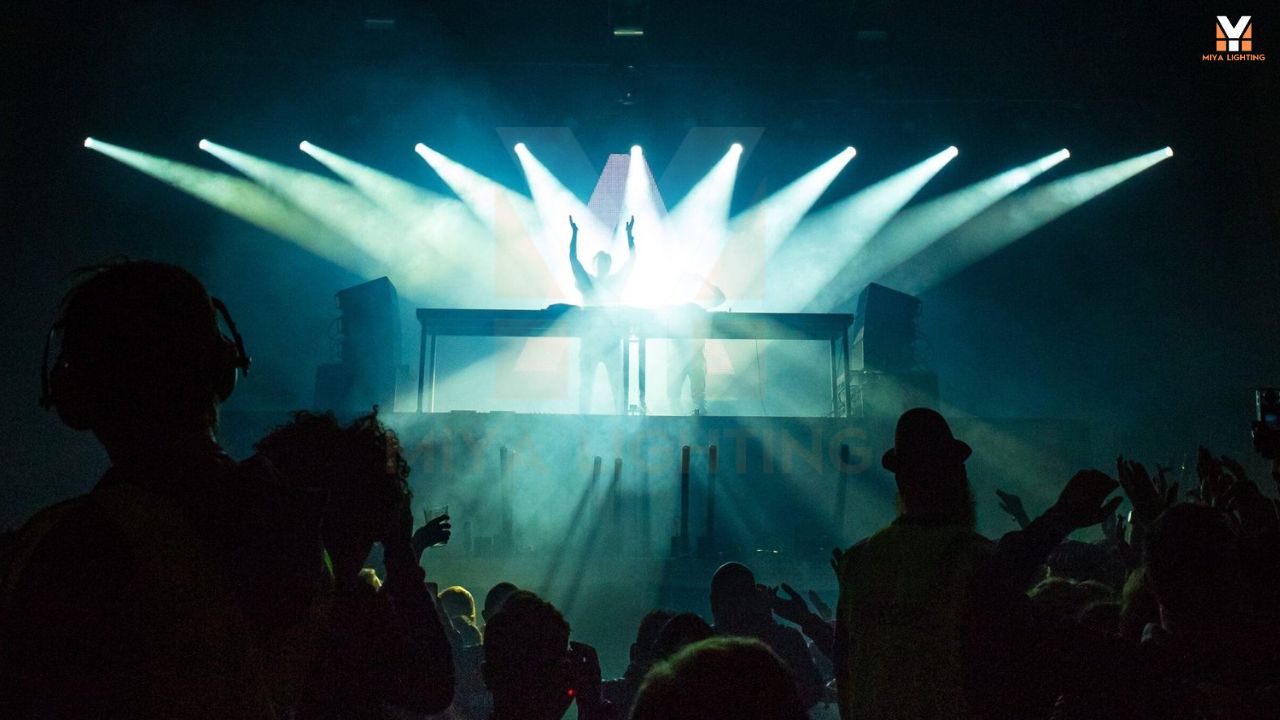
Most laser lighting videos online look incredible. You see sharp beams slicing through the air, dramatic movement above the crowd, and a full concert-style atmosphere. Almost every demo relies on one thing: a perfect layer of haze.
But when it comes time to set up for a real event, things often change.
Wedding venues, hotels, ballrooms, restaurants, corporate spaces, churches, and schools frequently restrict or completely ban fog machines. Fire alarms, ventilation systems, guest comfort, and venue rules make atmospheric effects unreliable or impossible.
That’s when many users start to question their gear.
They wonder why their laser lighting doesn’t look as powerful as expected, or why the beams that looked amazing in videos suddenly seem to disappear. In reality, the issue isn’t the laser light projector at all—it’s the environment.
Understanding how laser lighting behaves without fog is the key to creating professional results anywhere.
Why Laser Lighting Looks Different Without Fog
Laser lights don’t magically lose power when a fog machine isn’t running. The beam output remains the same. What changes is how the light becomes visible to the human eye.
A laser beam is only visible in the air when light scatters off tiny particles. Haze, fog, dust, or mist gives the beam something to reflect from. In clean air, there are very few particles, so you don’t see the beam traveling through space.
What you do still see clearly is where the laser lands.
Walls, ceilings, floors, backdrops, trees, and décor will still light up with the same intensity and color. This is why professional stage lighting designers don’t judge brightness by how visible a beam is in midair. They judge it by clarity, color, control, and how it interacts with the space.
Once you understand this, the design approach changes completely.

Rethinking Laser Lighting Without Fog
When fog machines are allowed, laser lighting is often used to create aerial effects. The beam itself becomes the star of the show, cutting through the room and adding motion overhead.
When fog isn’t allowed, laser lighting becomes architectural.
Instead of filling the air, lasers define the space. They highlight structure, add texture, and create movement across surfaces. This approach is widely used in professional stage lighting for weddings, corporate events, and holiday installations where a clean and elegant look matters more than aggressive effects.
With the right angles and programming, laser lights can still feel dynamic, immersive, and intentional—even without visible beams in the air.
Using Laser Lights Professionally in Fog-Free Venues
One of the simplest adjustments is aiming lasers upward. Ceilings and overhead structures respond beautifully to laser lighting, especially in ballrooms and tents. Even without haze, subtle motion across the ceiling creates depth and height that guests immediately feel.
Walls and backdrops are another powerful canvas. A high-quality laser light projector produces crisp edges and saturated color, which makes geometric patterns, soft movement, or seasonal visuals stand out clearly. This is particularly effective for Christmas events, weddings, and branded backdrops.
Movement also matters. Fast sweeping beams are designed for haze-filled environments. In clean air, slower motion looks more controlled and professional. Gentle rotations, mirrored patterns, and gradual transitions feel polished instead of chaotic.
In these settings, laser lighting works best as an accent layer. Wash lights set the overall mood, spotlights add texture, and lasers provide motion and personality. This layered approach is how professional stage lighting is designed in real-world venues.

A Practical Laser Choice for Haze-Free Environments
This is where choosing the right laser projector makes a real difference.
For venues where fog machines aren’t allowed, a unit like the MIYA MY1-A8E RGB Professional Laser Projector fits naturally into the design approach described above. Rather than relying on haze to look impressive, it focuses on beam precision, color accuracy, and stability—exactly what matters in clean-air environments.
With true high-output RGB performance and compressed red diode technology, the MY1-A8E produces sharper, more defined laser beams that stay crisp on ceilings, walls, and scenic elements. Its tight beam divergence allows patterns and movement to remain readable even without atmospheric effects.
The built-in ETC temperature control system keeps output stable during long events, which is especially important for weddings, corporate functions, and holiday shows that run for hours. Safety features such as key lock, scan-fail protection, safety shutter, and emergency stop ensure the projector meets FDA requirements for public venues.
Because it supports app-based control alongside professional protocols, the MY1-A8E works equally well for mobile DJs, event planners, and fixed installations. It’s compact, road-ready, and designed for real-world use—not just demo rooms.
Why Wash and Spot Lighting Matter More Without Fog
When fog machines aren’t allowed, wash lighting becomes the foundation of the entire design. Wash fixtures define the room’s color temperature, mood, and camera exposure. This is critical for photography and video, especially at weddings and corporate events.
Spot lighting becomes more important as well. Gobos, textures, and focused patterns replace aerial beams as the primary source of visual interest. When combined with laser lighting, the result feels rich and intentional rather than flat.
This is why experienced designers never rely on a single effect. Laser lights are part of a system, not a standalone solution.

Real-World Venue Scenarios
At weddings, haze is often restricted for safety and guest comfort. Laser lighting is used subtly, reflecting off ceilings or walls to add motion during key moments like entrances or dance sets. The focus stays romantic and camera-friendly.
Corporate events demand a clean, professional look. Laser lights are often used for branding elements or slow-moving patterns that support the atmosphere without distracting from speakers or presentations.
Churches and schools typically ban fog entirely. In these spaces, laser lighting enhances backdrops, seasonal décor, and stage elements while maintaining visibility and safety.
Small bars and restaurants may technically allow fog, but strong airflow often removes it instantly. Here, lasers are treated as decorative lighting rather than aerial effects, creating atmosphere without overpowering the space.

Designing for Reality, Not Demo Videos
Fog-free lighting isn’t a limitation—it’s a different design discipline.
Once you stop trying to force aerial effects and start using laser lighting as a tool to shape space, the results become cleaner, more elegant, and more professional. This is how experienced lighting designers work, and it’s how memorable events are created in real venues.
Laser lights don’t need fog to be effective. They need thoughtful placement, intentional movement, and the right expectations.
When you design for the environment instead of fighting it, your lighting instantly looks better—and your gear finally performs the way it should.

Leave a comment
This site is protected by hCaptcha and the hCaptcha Privacy Policy and Terms of Service apply.