
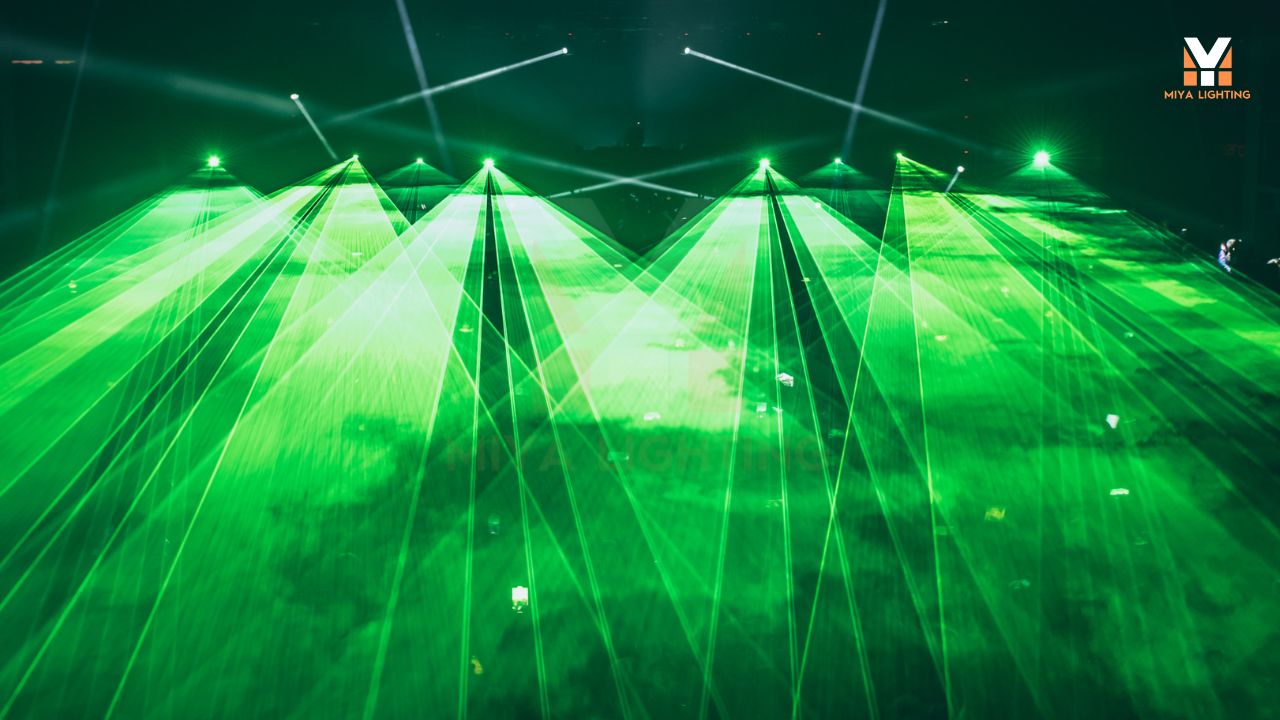
Choosing the right laser light for DJ work can save you money, setup time, and a lot of frustration. There are hundreds of DJ laser lights on the market, but not every fixture is built for real events. Some look good in short demo videos but feel weak in a ballroom. Others are powerful, but too heavy or complicated for mobile DJs who need fast setup.
The best DJ laser lights are not always the most expensive ones. The right choice depends on where you usually perform, how much control you need, how often you travel, and what kind of visual experience your clients expect.
This guide explains how to choose laser lights for DJs based on venue size, budget, portability, support, safety, and real-world event use.
Assess Your Typical Venues First
Before buying any DJ laser light, start with your most common performance spaces. A laser that works well in a small lounge may not be strong enough for a large wedding hall or nightclub.
For small venues up to 1,500 sq ft, such as private rooms, house parties, small bars, and compact lounges, lower-power laser lights can work well when the space is dark and there is light haze. In these spaces, placement and beam direction matter just as much as power.
For medium venues from 1,500 to 5,000 sq ft, such as wedding halls, hotel ballrooms, school events, and small clubs, DJs usually need stronger RGB output. A more capable DJ laser projector can help the laser beam stay visible even when the room has uplighting, chandeliers, or partial house lights.
For large venues over 5,000 sq ft, such as bigger clubs, concerts, and festival stages, you may need multiple professional DJ laser lights, higher power fixtures, moving head lasers, and DMX programming. In larger spaces, one small laser light DJ fixture usually will not create enough impact.
The goal is simple: match the laser to the venue you actually work in, not just the wattage printed on the product page.

Balance Budget with Professional Features
Budget is important, but buying too cheap can cost more later. Many low-cost DJ laser lights under the entry-level professional range may have weak optics, rough scanning, limited control, and shorter lifespan. They may work for casual home use, but they often struggle in paid events.
For many working DJs, the best value is usually in the middle range. This is where you can find laser lights for DJs with stronger RGB output, better beam quality, DMX control, app control, and more reliable construction.
Above the mid-range, you start entering specialized professional territory. These systems may be ideal for permanent club installations, touring productions, or large-scale shows, but they are not always necessary for wedding DJs or mobile event teams.
When choosing within your budget, prioritize the features that affect real performance:
- Output power and beam quality
- DMX compatibility
- RGB color mixing
- RGB color mixing
- App control for quick setup
- Animation capability if you need text, logos, or custom effects
Do not judge only by DJ light price. A cheap laser can look expensive in a dark bedroom, but disappear in a real venue. A better laser DJ light should look clean in haze, hold beam definition, and give you enough control for different events.
Recommended Option: MIYA G1 RGB Animation Laser Light
For DJs who need stronger output, flexible control, and customizable effects without moving into a very expensive touring-level system, the MIYA G1 RGB Animation Laser Light 10W App & DMX Control is a practical choice.
The G1 Series offers 10W RGB power, full-color analog modulation, and precision scanning. It is suitable for weddings, club nights, corporate events, private venue parties, DJ shows, and medium-size spaces that need more than simple dots or basic party laser effects.
One of the strongest points of the MIYA G1 is control flexibility. It supports app control, DMX, sound mode, and ILDA control. A mobile DJ can make fast changes from a phone. A venue operator can use DMX for programmed scenes. For custom logos, names, text, or animation, ILDA control gives more creative options.
For DJs comparing DJ laser lights for sale, the G1 sits in a useful middle range. It is more capable than a simple home party laser, but easier to manage than a large professional laser system.
Consider Portability for Mobile DJs
If you set up in different locations every week, portability matters. A powerful fixture is not helpful if it is too heavy, slow to mount, or difficult to transport.
Mobile DJs should look for laser DJ lights with a compact body, durable construction, secure mounting brackets, and quick control options. App control, auto mode, and sound-active mode are helpful when setup time is limited.
If you play weddings, school events, corporate parties, and private venues, your DJ equipment should be easy to pack, carry, mount, and operate. A laser that saves ten minutes during setup can make a real difference on a busy event day.
For fixed club installations, portability becomes less important. In that case, stronger output, long-term reliability, DMX integration, and effect capability matter more.
Warranty and After-Sales Support
Laser lights are working equipment. They get transported, mounted, powered for long hours, and used in real event environments. Reliability should be part of the buying decision.
Before choosing a DJ laser light projector, check whether the supplier offers warranty support, technical help, and replacement parts. A lower price is not always a better deal if the product fails during a paid show and you cannot get support.
For professional DJs, strong after-sales service is almost as important as power and control features. Reliable equipment protects your reputation.

Real-World Laser Setups for Different Events
Nightclubs and Bars
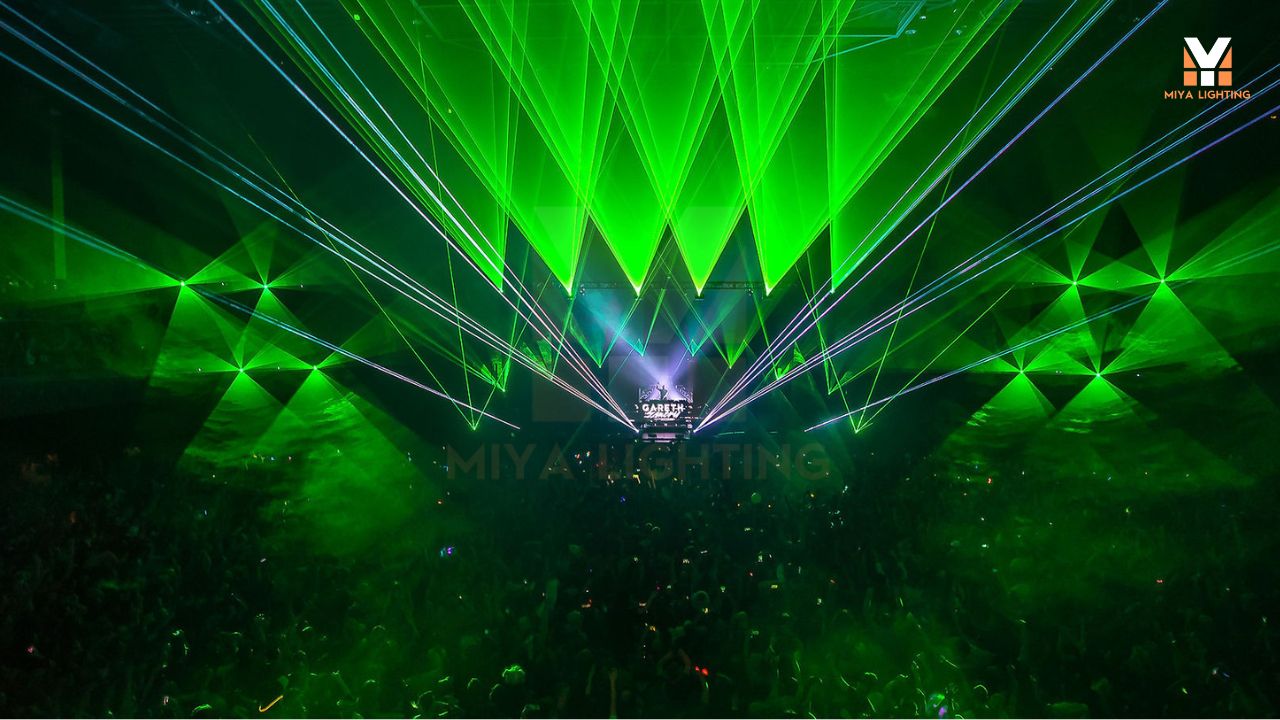
Nightclubs and bars need high-energy laser effects. A typical setup may include two RGB DJ laser lights positioned on opposite sides of the dance floor, one moving head laser near the DJ booth, DMX programming, and a fog or haze system for better beam visibility.
This type of setup works well for weekend club nights, EDM events, bar promotions, and themed parties. The laser beam becomes part of the room’s identity, especially when guests record and share the show online.
Weddings and Banquets
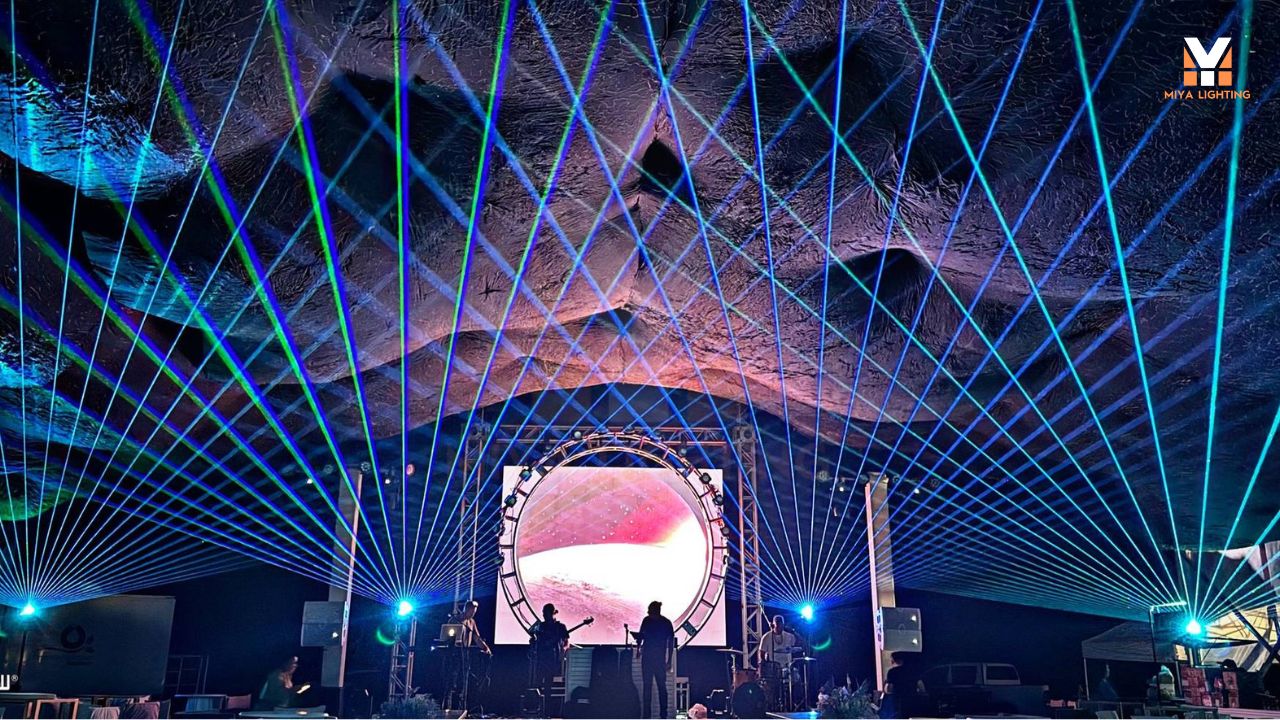
Wedding laser lighting should be more controlled. During dinner, speeches, and formal moments, the lighting should stay elegant. When the DJ set begins, slow-moving beams, soft colors, and short programmed effects can help the room shift into party mode.
A fixture like the MIYA G1 works well for wedding DJs because it can run simple sound-active effects, but also support custom names, text, or animation when needed.
Festivals and Concerts
Festival and concert setups need more power and stronger synchronization. Laser lights for DJs in these spaces are often mounted on stage trusses and controlled with DMX or professional show software.
Outdoor events also need haze or fog placement planned carefully. Without particles in the air, even a strong laser beam may not look as dramatic.
Corporate Events
Corporate clients often want clean, branded visuals. A DJ laser projector with animation capability can project company logos, product names, award titles, or short text sequences.
For corporate events, safety and presentation matter more than aggressive effects. The laser should support the brand moment without overwhelming the room.
Troubleshooting and Maintenance Tips
Even good DJ lasers need regular care.
If your laser loses DMX sync, check the cable connection, DMX address, and termination. Keep a backup cable in your kit and have sound-active or auto mode ready as a fallback.
If the fixture overheats, check ventilation. Do not block fan intakes with fabric, decorations, cases, or stage materials. Clean vents regularly with compressed air.
If patterns look distorted, check whether the unit was bumped during transport, whether the mount is loose, or whether dust has collected on the output window. Clean optical surfaces carefully with a microfiber cloth and proper cleaner.
A simple maintenance routine every few months should include checking brackets, testing all control modes, cleaning output windows, inspecting cables, and confirming safety functions.

Safety First
Safety with DJ laser lights is non-negotiable.
Position lasers above eye level whenever possible. Direct beams toward ceilings, walls, stages, or safe projection areas. Avoid static beams at face height. Never point lasers at mirrors, reflective glass, roads, windows, aircraft paths, or uncontrolled public areas.
Use stable mounting and secure cables. Follow local regulations and venue rules, especially for public events or higher-power laser systems.
This guidance is general only. Requirements may vary by location, venue, and laser class, so always follow applicable laws and professional safety standards.
Final Thoughts
A smart investment in quality laser lights for DJs can improve your show, your client experience, and your brand. The right DJ laser light show creates moments people remember, photograph, and talk about after the event.
For DJs who want a strong balance of power, control, portability, and value, the MIYA G1 RGB Animation Laser Light is a practical option. With 10W RGB output, app control, DMX, sound mode, ILDA support, and fast US warehouse delivery, it gives modern DJs a flexible way to upgrade their visual production without making the setup overly complicated.

Leave a comment
This site is protected by hCaptcha and the hCaptcha Privacy Policy and Terms of Service apply.