
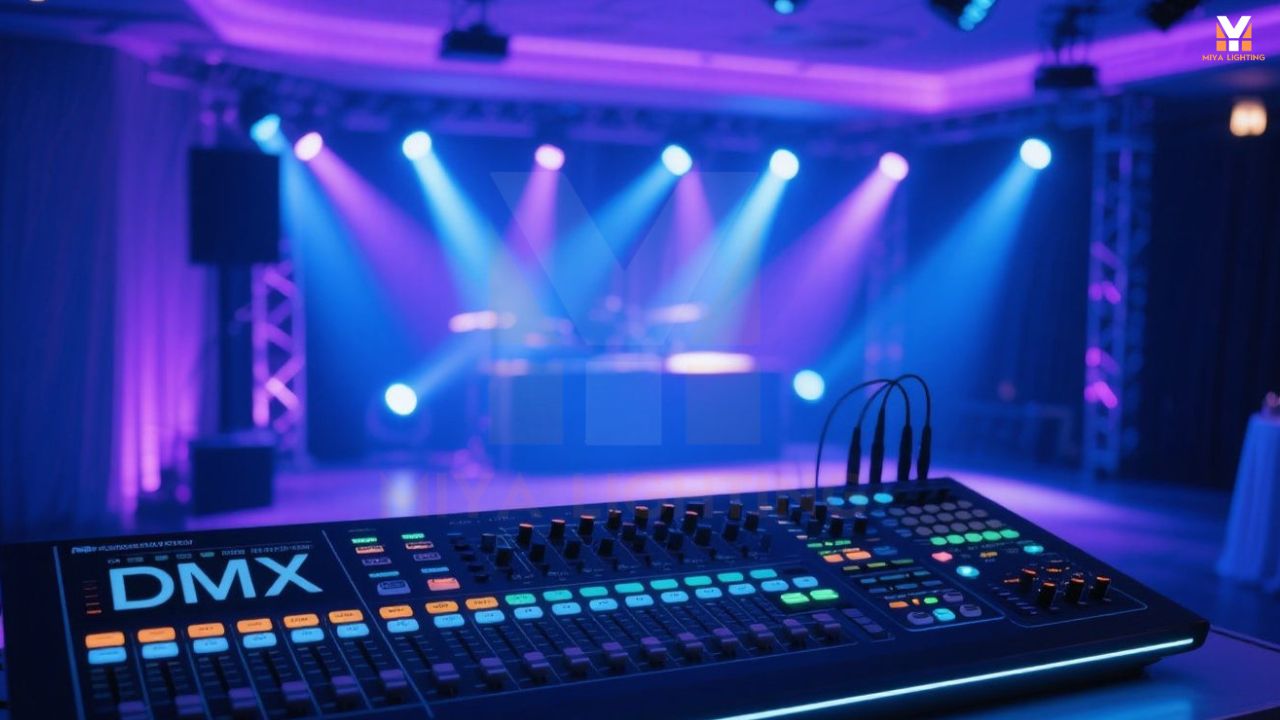
If you’ve ever worked with stage lighting, DJ lighting, or a laser light projector, you’ve probably seen the term DMX512 or sometimes written as DMX 512. It shows up on product specs, cables, and controllers—but many people still wonder what it actually means.
At the same time, you might also hear people talk about a daisy chain setup or ask, what is a daisy chain in DMX lighting?
These two ideas are closely connected. Once you understand how DMX512 works and how devices are daisy-chained, the whole system becomes much easier to use.
What Does DMX512 Actually Mean
The name DMX512 comes from two parts. “DMX” stands for Digital Multiplex, which refers to how data is sent from a controller to lighting devices. The number “512” represents the maximum number of control channels available in a single DMX signal.
In practical terms, DMX512 lighting control allows one controller to send instructions to multiple fixtures through a single data line. This is why it’s so widely used in laser light show projector systems, concert lighting, and professional stage lighting setups.
Instead of controlling each device individually, everything is organized through a shared signal that carries multiple channels of information.
How DMX512 Works in Real Use
When you connect a DMX controller to your lighting system, it sends digital signals through a cable. Each signal contains values that control different aspects of your lights.
A full DMX512 universe includes 512 channels, and each channel can carry values from 0 to 255. These values control things like brightness, color, movement, and effects.
For example, in a laser light projector, one channel might control pattern selection, while another controls speed or color transitions. When you adjust a slider on the controller, you're changing a channel value, and the light responds instantly.
Each fixture in the system is assigned a starting address, which tells it which channels to listen to. This allows multiple devices to operate independently while sharing the same DMX signal.

What Is a Daisy Chain in DMX Lighting
To understand how multiple lights are connected, it’s important to answer the question: what is a daisy chain?
A daisy chain is a method of connecting multiple devices in a series, one after another, using a single signal path. In DMX lighting, this means connecting fixtures in a line rather than running separate cables to each one.
In a DMX daisy chain, the signal flows like this:
Controller → First Light → Second Light → Third Light → and so on
Each device receives the signal and passes it along to the next device.
This setup is what makes DMX512 so efficient. With just one cable line, you can control an entire system of lights.
Why Daisy Chain Is Essential for DMX512
Without a daisy chain connection, managing multiple lighting fixtures would be complicated and messy. You would need separate cables and control paths for every device.
By using a dmx daisy chain, you simplify the entire setup:
Fewer cables
Faster installation
Easier expansion
This is especially useful in environments like:
DJ lighting setups
concert lighting rigs
laser light show systems
As your setup grows, you can simply add more fixtures to the chain without redesigning your entire system.

How DMX512 and Daisy Chain Work Together
The beauty of DMX512 is how well it works with a daisy chain structure.
The controller sends out one continuous stream of data. Each device in the chain reads only the channels assigned to it and ignores the rest. Then it passes the full signal to the next device.
This means:
All devices stay synchronized
Each fixture still behaves independently
The system remains scalable
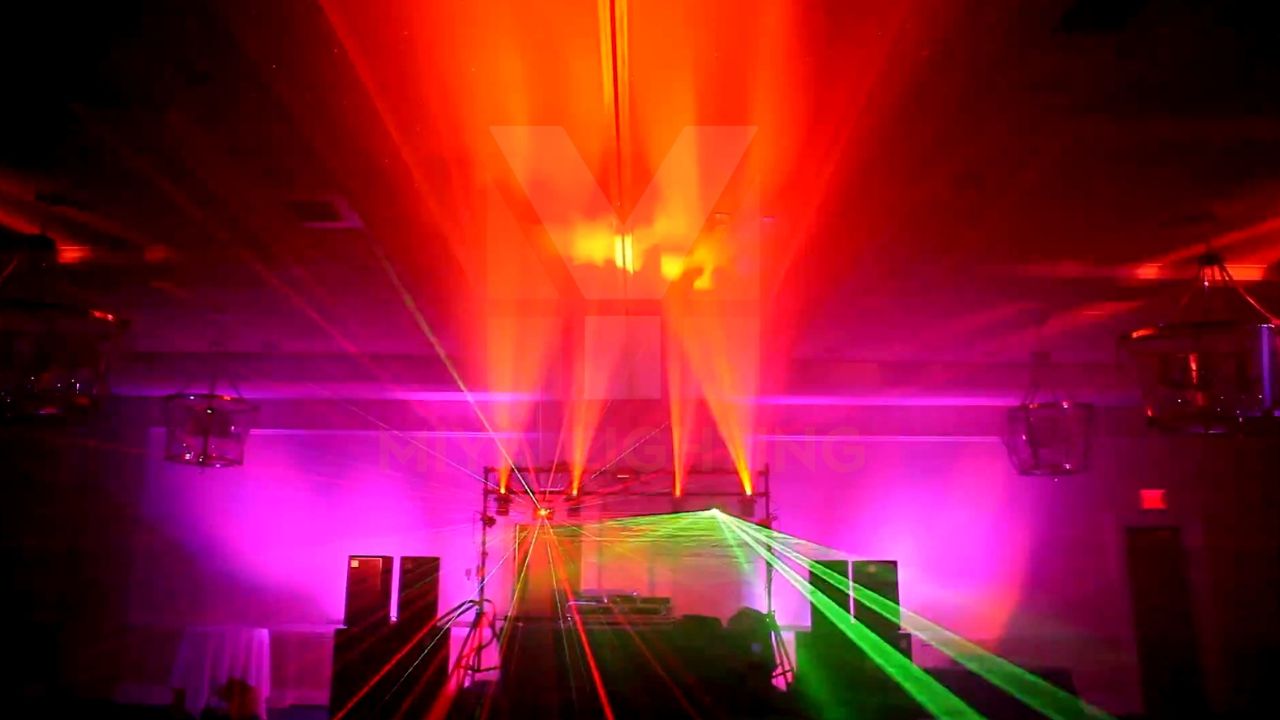
For example, in a laser light show projector outdoor setup, you might have multiple laser units connected in a daisy-chained configuration. Each unit displays different effects based on its assigned address, even though they all share the same DMX signal.
Understanding Channel Control in DMX512
Each channel in a DMX512 system controls a specific function. The value sent through that channel determines how the function behaves.
A value of 0 usually means off, while 255 represents full output. Values in between allow smooth transitions.
This level of control is what makes DMX lighting so powerful. Instead of simple on/off behavior, you get precise control over every aspect of your lighting system.
In a laser light projector, this could mean adjusting beam movement, selecting animations, or changing colors—all through channel values.

3-Pin vs 5-Pin DMX Connections
Another common question in DMX512 lighting is the difference between 3-pin and 5-pin connections.
In most modern setups, both types carry the same DMX 512 signal. The difference is mainly in the connector design.
Professional systems often use 5-pin connectors as part of the original DMX standard, while many newer products use 3-pin connectors for convenience.
Functionally, they work the same. As long as your cables match your devices—or you use adapters—you can build a reliable dmx daisy chain with either option.
Why DMX512 Is Still the Industry Standard
Even with newer technologies available, DMX512 remains the backbone of lighting control.
It’s widely used because it is:
Reliable
Easy to expand
Compatible across brands
Whether you're running a small DJ lighting setup or a large laser light show, DMX512 lighting control provides the flexibility needed to create synchronized effects.
The ability to connect devices in a daisy chain makes it especially practical for real-world setups.

Making DMX512 Easier for Beginners
At first, DMX lighting can feel technical. Understanding addresses, channels, and signal flow takes a bit of time.
However, once you grasp the basics of DMX512 and daisy chain connections, everything starts to make sense.
Many modern lighting systems also include alternative control modes like app control or sound activation, allowing beginners to get started without diving fully into DMX right away.
As your experience grows, you can gradually move into more advanced DMX512 control for greater precision and creativity.
Final Thoughts
So, why is it called DMX512?
Because it’s a Digital Multiplex system with 512 channels, designed to control lighting devices efficiently through a single signal.
And what makes it truly powerful is how it works with a daisy chain setup, allowing multiple fixtures to be connected and controlled seamlessly.
Once you understand how DMX512 and daisy-chained connections work together, you unlock a whole new level of control in stage lighting, DJ lighting, and laser light show projector systems.


Leave a comment
This site is protected by hCaptcha and the hCaptcha Privacy Policy and Terms of Service apply.