
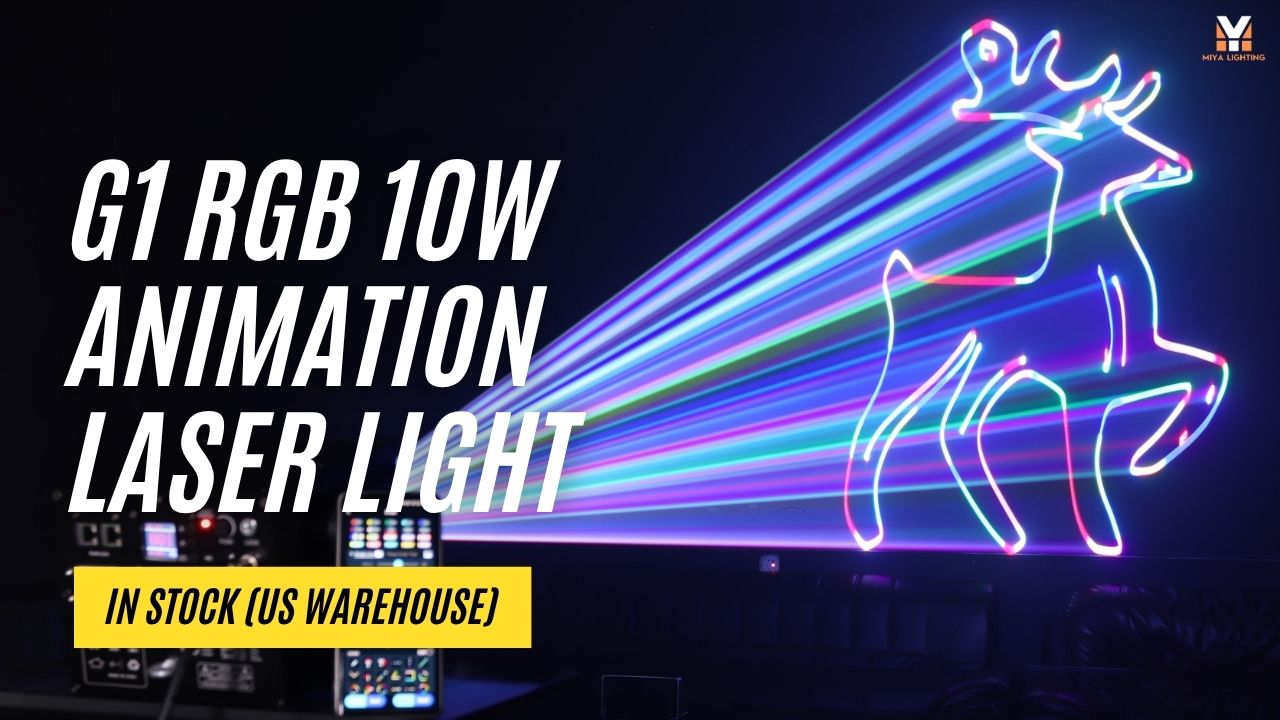
If you’ve ever watched a laser light show and seen text, logos, or animated shapes floating in the air, you’ve probably wondered how those visuals are actually created. At first glance, it might look similar to a video projection, but the way laser graphics work is completely different from traditional display systems.
A laser light projector doesn’t display images like a screen. Instead, it draws them in real time using a single laser beam that moves at extremely high speed. This is what gives laser graphics their clean lines, sharp edges, and dynamic motion—qualities that make them stand out in stage lighting, concert lighting, and outdoor laser light show setups.
The Core Principle Behind Laser Graphics
At the center of every laser projector is a scanning system made up of two tiny mirrors. These mirrors are controlled by a computer and move at very high speed with extreme precision. One mirror controls horizontal movement, while the other controls vertical movement.
The laser beam reflects between these mirrors before being projected outward. Each position of the beam creates a single point of light. By moving from point to point thousands of times per second, the system connects those points into lines and shapes.
Because this happens so quickly, the human eye perceives a complete image instead of individual points. This effect, known as persistence of vision, is what allows laser graphics to appear smooth and continuous.
Drawing Instead of Displaying
Unlike a traditional display, a laser light projector does not fill a surface with pixels. Instead, it draws images by connecting points with lines. A circle is traced, text is outlined, and animations are created through rapid motion.
This is why laser graphics often appear as clean outlines rather than filled images. It also explains why they look so precise and visually striking, especially when used in a laser light show projector system.

Speed and the Illusion of Motion
Modern laser systems operate at speeds of 30,000 to 60,000 points per second. At that rate, the laser beam moves faster than the eye can track, creating the illusion of a stable image.
However, this speed also limits how complex an image can be. If too many points are used, the system may struggle to maintain clarity, leading to flickering or distortion. This is why laser animation graphics are often optimized to balance detail and performance.
Why Laser Graphics Are Different from Video
A common misconception is that a laser projector can display video like a standard projector. In reality, the two systems work very differently.
Video projection displays millions of pixels simultaneously. Laser graphics, on the other hand, must draw each line individually. To convert video into laser format, the image must be simplified into outlines, which reduces detail significantly.
Because of this, a laser light show projector is best suited for stylized visuals like logos, text, and animated effects rather than full-motion video.
Beam Quality and Visibility
The quality of the laser beam plays a major role in how graphics appear. A well-focused beam with low divergence produces sharp, clean lines, while a weaker or poorly aligned beam spreads out and reduces clarity.
This becomes especially important in larger spaces or outdoor laser light show environments, where distance affects visibility. A high-quality laser projection system ensures that graphics remain crisp even when projected far away.

The Role of Color in Laser Graphics
Color also affects how we perceive laser graphics. The human eye is most sensitive to green light, which means green elements often appear brighter than red or blue at the same power level.
Modern laser light projectors use RGB systems to combine red, green, and blue light, creating vibrant and dynamic visuals while maintaining strong visibility.
Real-World Applications of Laser Graphics
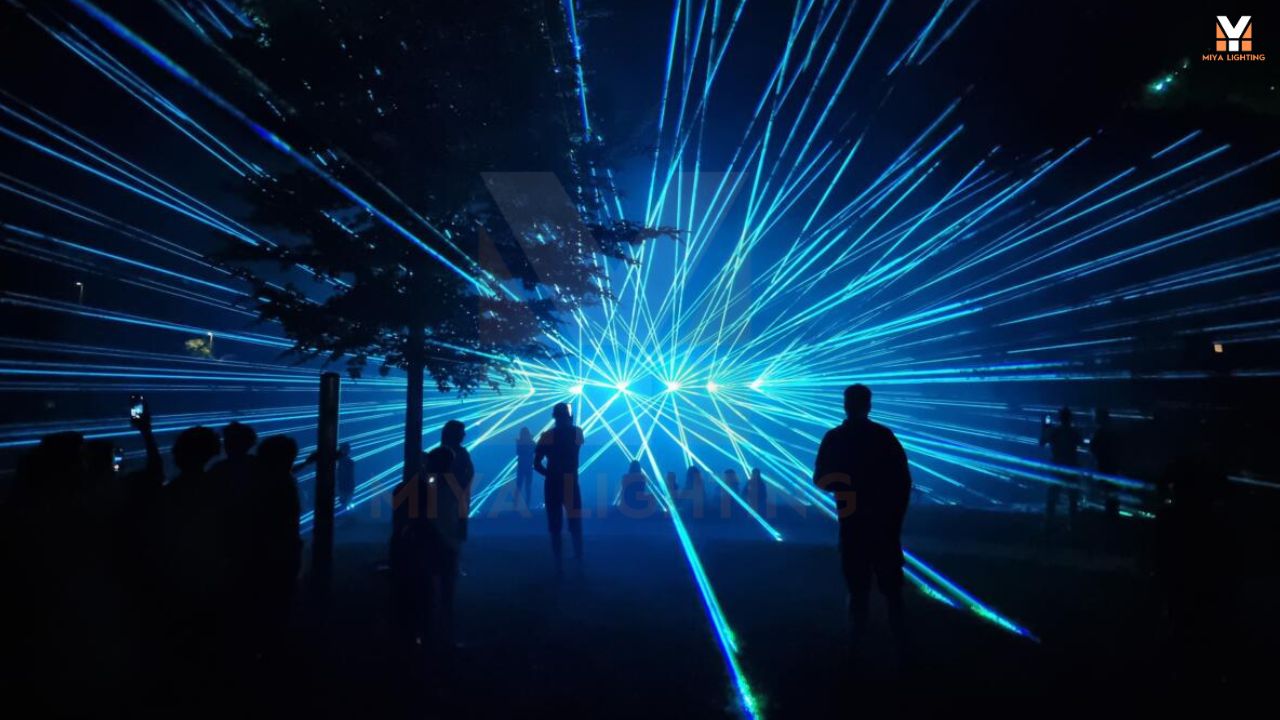
Today, laser graphics are widely used across entertainment and events. In clubs, they enhance DJ lighting and create immersive atmospheres. In concerts, they bring depth and motion to stage lighting. In outdoor environments, they can project large-scale visuals for a powerful outdoor laser light show.
They are also commonly used for branding and artistic installations, where logos, text, or custom visuals are projected onto buildings or open space.
Modern Laser Systems Make It Easier Than Ever
While the technology behind laser graphics is advanced, modern systems have made it much easier to use.
For example, compact systems like the MIYA G1 RGB Animation Laser Light (10W) combine professional performance with user-friendly control. With full RGB analog modulation and precision scanning, it delivers sharp and customizable laser graphics suitable for both indoor and outdoor use.
The system supports multiple control options, including app, DMX, sound, and ILDA, allowing you to create and adjust visuals in real time. Whether you're building a simple setup or a more advanced laser light show projector outdoor system, it adapts easily.
Just as importantly, the MIYA G1 is available in US warehouse stock, which means fast delivery in just a few days—ideal for DJs, event planners, or anyone preparing for an upcoming show.
If you’re looking for a simple way to start creating your own laser graphics, the MIYA G1 gives you the tools without the learning curve.

Why Laser Graphics Stand Out
What makes laser graphics unique is how they combine precision and motion. A single laser beam can create complex visuals with incredible clarity, something traditional lighting can’t replicate.
This is why they are widely used in:
- Stage lighting
- Concert lighting
- DJ lighting
- Outdoor laser light shows
No matter the environment, laser graphics always create a strong visual impact.

Final Thoughts
So, how do laser graphics work?
They are created by a fast-moving laser beam, guided by precision mirrors and controlled by software, drawing images point by point at incredible speed. What we see is a complete image, but behind it is a continuous process of motion and control.
While they differ from traditional video systems, laser graphics offer something unique—sharp lines, smooth motion, and high visual impact.
If you want to turn ideas into real laser graphics, the right system makes all the difference.
MIYA G1 10W RGB Animation Laser Light gives you:
- Sharp, precise laser graphics
- Sharp, precise laser graphics
- App, DMX, and ILDA control flexibility
- Compact design for easy setup
- Fast US warehouse shipping (2–5 days delivery)
Start building your own laser light show today—no complex setup required.

Leave a comment
This site is protected by hCaptcha and the hCaptcha Privacy Policy and Terms of Service apply.