
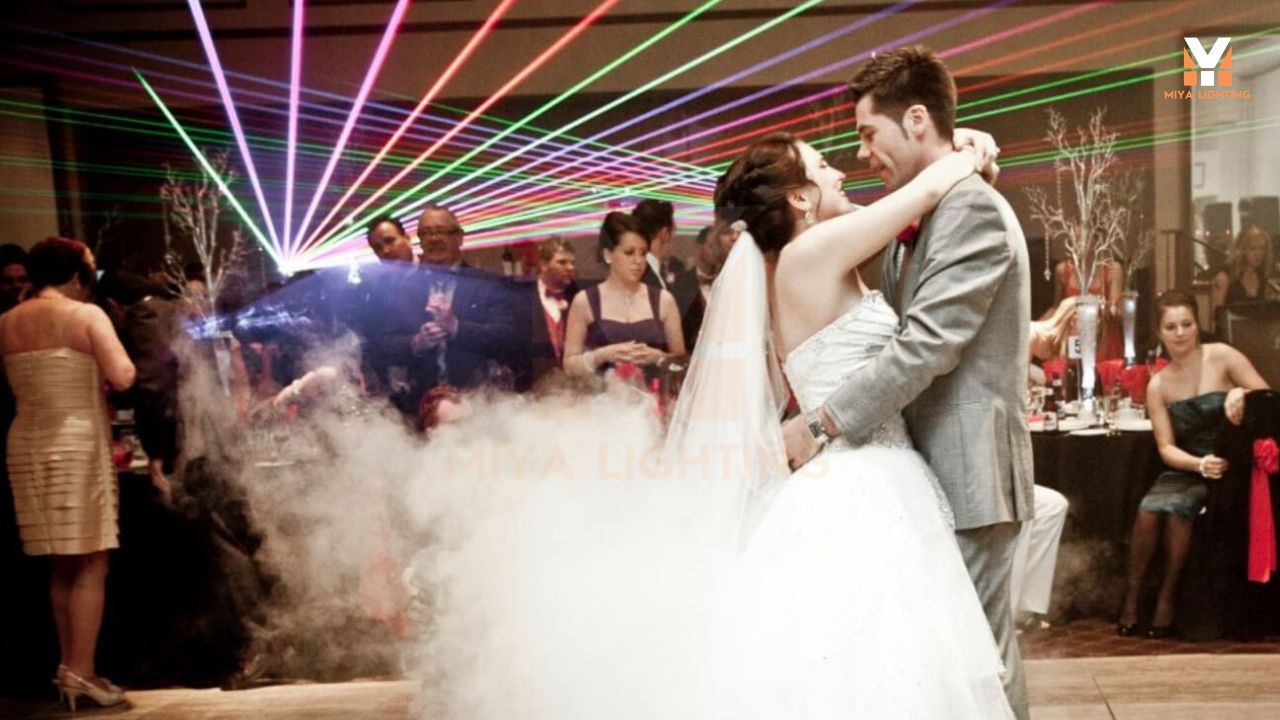
A wedding dance floor should not feel like an empty space waiting for people to show up. It should feel like the heart of the room. It is where the first dance happens, where guests finally let loose, and where most of the best videos of the night are filmed.
That is why choosing the right wedding dance floor lights matters. The right lighting can make a simple banquet hall feel more romantic, help guests feel comfortable getting on the floor, and give the DJ a stronger visual atmosphere once the party starts.
The secret is not using one dramatic effect all night. A great dance floor setup uses layers: soft background lighting, a focused feature effect, personal details, and party-ready movement. This is where MIYA G1 can fit naturally into the overall wedding lighting plan.
Start with the Room, Not the Light
Before buying any lights for wedding reception spaces, look at the venue itself. Is the dance floor in the center of the room or off to one side? Is the ceiling white, dark, high, or low? Is there a clean wall or backdrop near the DJ booth? Are there chandeliers, mirrors, glass panels, or reflective decorations?
These details decide what kind of lighting will look best.
A ballroom with a clean ceiling can look beautiful with soft ceiling patterns. A darker room may make laser effects stand out more clearly. A venue with a busy floral wall may need simpler lighting so the space does not look cluttered.
Good wedding lights should work with the room, not fight against it.

Build a Warm Base First
Most receptions need a warm visual base before adding laser effects. This is where traditional wedding lights still matter. Candles, uplights, indoor fairy lights wedding decor, and bistro lights wedding setups can make the room feel soft and welcoming.
For outdoor events, outdoor wedding lights, backyard outdoor wedding lights, and romantic backyard wedding lights can create a relaxed, intimate atmosphere. These are great for dinner, cocktail hour, outdoor seating areas, and photo corners.
But warm lights alone do not always make the dance floor feel exciting. They create mood, but they do not create movement. That is where a laser effect can add a more modern layer.
Add a Signature Dance Floor Effect
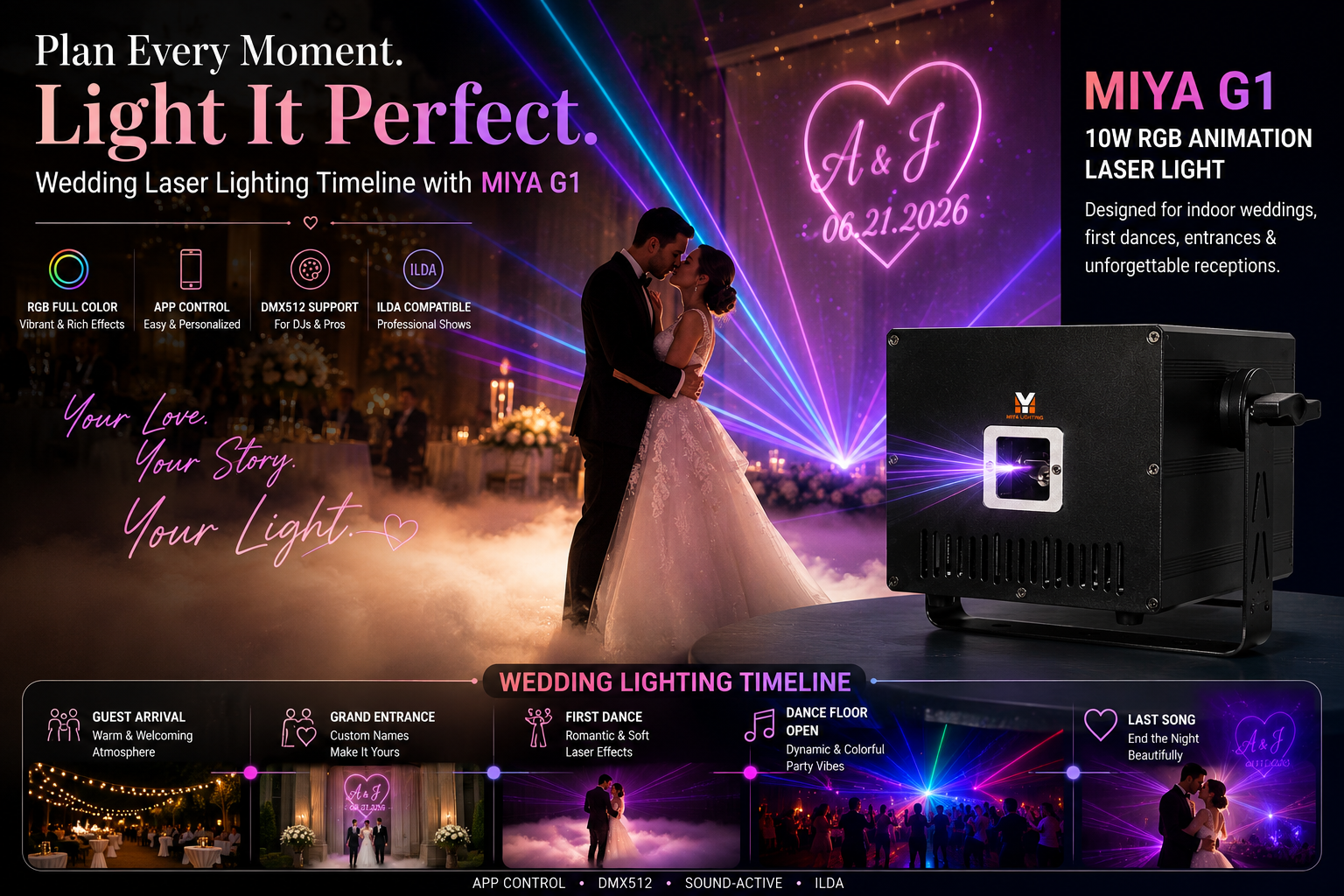
Once the room has a warm base, think about the one effect that makes the dance floor feel special. This could be a soft moving pattern during the first dance, the couple’s names projected near the floor, or colorful RGB motion once the party starts.
The MIYA G1 RGB Animation Laser Light 10W is useful here because it is not limited to one look. It can create custom names, simple graphics, romantic patterns, and colorful dance floor effects. For couples, App control makes it easier to create personal visuals from a phone. For DJs and lighting teams, DMX and ILDA support make it easier to build more polished scenes.
This is what separates ordinary lights wedding setups from a more memorable reception. The dance floor starts to feel designed around the couple instead of simply lit from the corners.
Keep the First Dance Soft
The first dance does not need aggressive beams or fast movement. In fact, softer is usually better.
A slow pattern, gentle color movement, or simple custom text can make the moment feel emotional without pulling attention away from the couple. If the photographer is shooting from across the room, a subtle laser background can add depth to the photos without making the scene look too busy.
The goal is not to impress guests with power. The goal is to make the moment feel intentional.
Let the DJ Moment Feel Bigger
After dinner, the lighting can change. This is when wedding DJ lights become important. Guests are more likely to dance when the room visually shifts from dinner mode to party mode.
The MIYA G1 can move from soft romantic visuals to brighter RGB movement or sound-responsive effects. This gives the DJ more energy to work with without requiring a full club lighting rig.
For smaller venues, one well-placed laser can make the dance floor feel more active. For larger rooms, it can work alongside uplights, moving heads, or other lights for a wedding setup.

Indoor vs. Outdoor Use
The MIYA G1 is best for indoor wedding receptions, private event rooms, hotel ballrooms, and banquet halls. Indoor spaces give you better control over brightness, projection direction, and guest safety.
For outdoor wedding lights or wedding lights outdoor setups, the plan needs to be different. Outdoor lights for wedding spaces should be weather-safe and properly powered. Bistro lights, string lights, and outdoor wedding party lights are often better for open-air atmosphere. If you want laser effects outdoors, use fixtures designed for outdoor conditions.
Do not use indoor laser equipment in rain, moisture, or unstable outdoor setups.
Setup Tips That Make a Big Difference
Place the laser above head height whenever possible. Aim it toward a wall, ceiling, backdrop, or open space above the dance floor. Avoid aiming beams directly at guests.
Watch for mirrors, glass, metallic balloons, shiny table decor, and reflective surfaces. These can bounce beams into places you did not plan.
Test the effect before guests enter the room. Look at it from the guest tables, the dance floor, the DJ booth, and the photographer’s main angle. Small adjustments before the reception can make the lighting look much more professional.

FAQ About Wedding Dance Floor Lights
- What are the best wedding dance floor lights for a small reception? A mix of warm ambient lighting and one focused effect works best. The MIYA G1 can add custom names, soft patterns, and party movement without needing a large setup.
- Can laser lights work with bistro lights wedding decor? Yes. Bistro lights create warmth, while laser lighting adds motion and personalization to the dance floor.
- Are wedding ceiling lights important? They can be. A clean ceiling can make soft laser patterns or ambient effects look more immersive.
- Can the MIYA G1 be used outdoors? The MIYA G1 is best for indoor use. For outdoor wedding lights, choose equipment made for outdoor conditions.
- Do I need a DJ to use laser lighting? Not always. App control works for simple effects, but a DJ or lighting operator can help make cues feel smoother.
Final Thoughts
Wedding dance floor lights should do more than decorate the room. They should help guide the mood of the night—from a soft first dance to a packed dance floor later on.
Traditional wedding lights, fairy lights, bistro lights, and outdoor wedding lights all create atmosphere. A laser adds movement, focus, and a personal touch.
With MIYA G1, couples, DJs, planners, and venues can create a dance floor that feels more intentional, more modern, and more memorable without making the setup overly complicated.

Leave a comment
This site is protected by hCaptcha and the hCaptcha Privacy Policy and Terms of Service apply.