
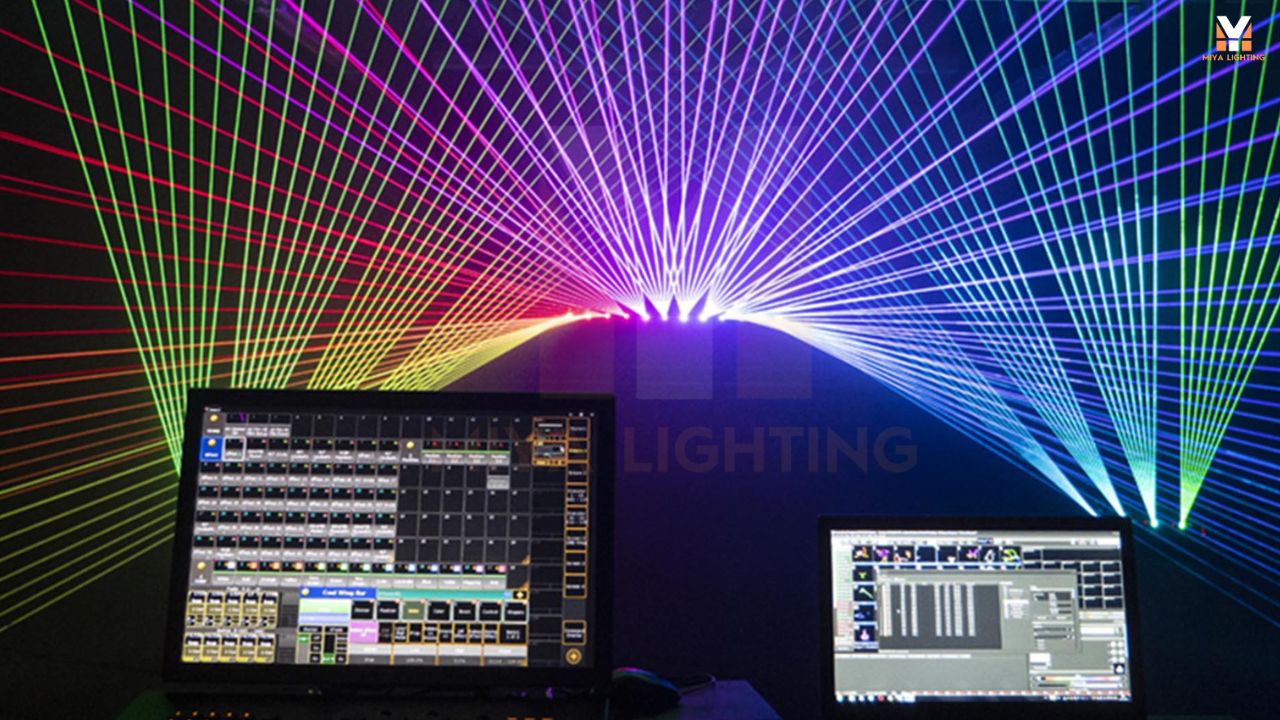
When people shop for a laser light show projector, they usually focus on brightness, wattage, or beam effects first. But in professional stage lighting, one of the most important factors is something many buyers overlook: color balance.
A laser system can be extremely bright, but if the RGB colors are not balanced correctly, the entire visual experience can feel inconsistent. White tones may look blue or green, graphics can appear unnatural, and beam effects may lose their professional appearance.
In modern event lighting, especially for concerts, clubs, and festivals, color quality matters just as much as power. This is why professional laser manufacturers like MIYA place such a strong focus on RGB color balance and analog modulation.
What Is Color Balance in a Laser System
In a professional laser light show, color balance refers to the intensity relationship between the red, green, and blue laser sources inside the projector.
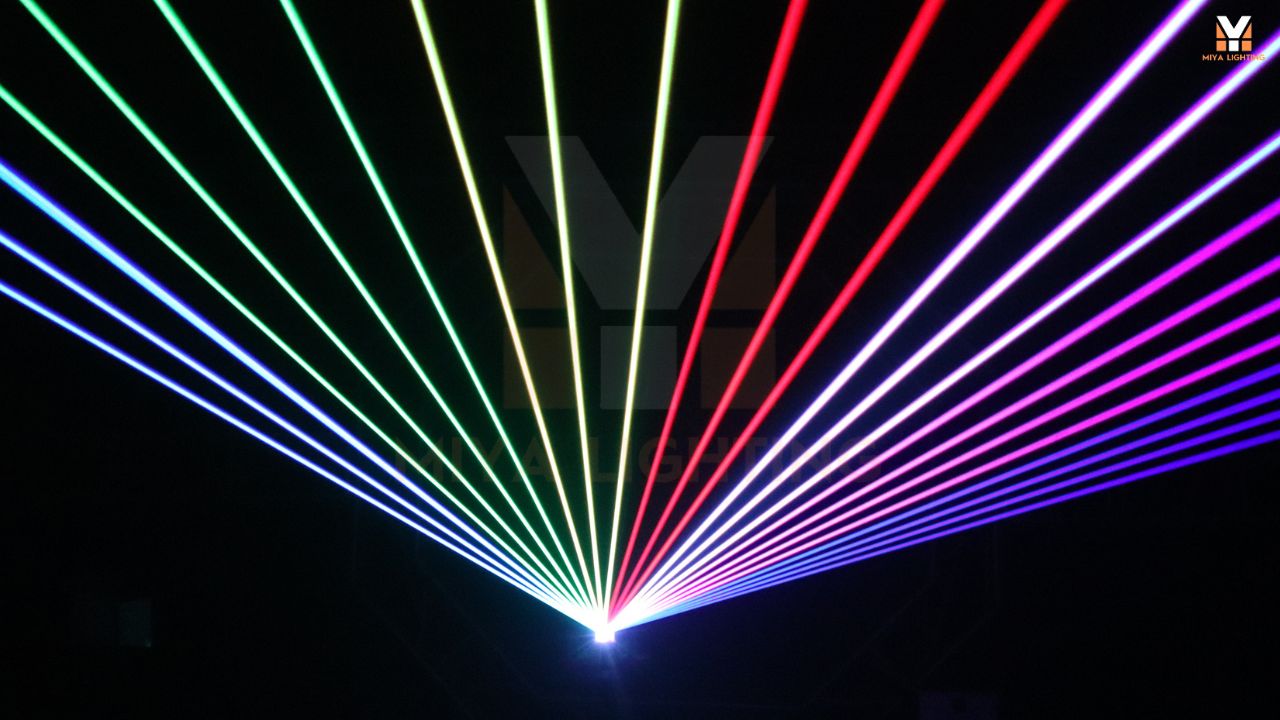
Most modern RGB stage laser projector systems use separate red, green, and blue laser modules. By adjusting the intensity of each source, the system can create millions of color shades.
The goal is to achieve the following:
- Accurate RGB color mixing
- Consistent white output
- Smooth transitions between colors
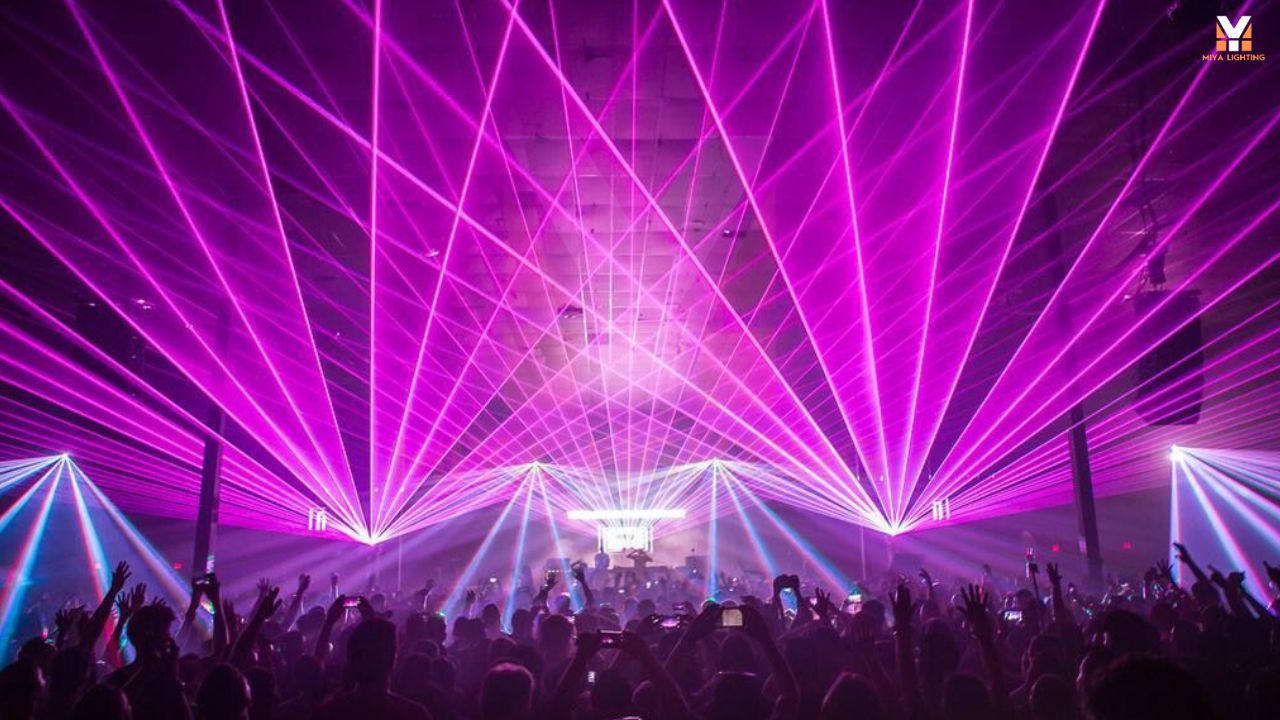
This becomes especially important in environments like concert lighting, club lighting, and large-scale festival lasers, where multiple projectors are often used together

Why Color Balance Matters in Stage Lighting
In professional stage lighting, visual consistency is critical.
Imagine a concert where one projector produces cool blue-tinted white while another produces warm yellowish white. Even if the audience doesn’t understand why, the difference is immediately noticeable.
This is why proper color balance is essential for the following:
- Concert lights
- DJ lighting setups
- Theater lights
- Outdoor laser light show productions
For large productions, matching the color tone between multiple systems creates a cleaner and more immersive experience.
RGB Color Mixing and Analog Modulation
Color balance depends heavily on how the projector mixes RGB wavelengths.
Professional laser systems use analog modulation, which allows each laser source to change intensity smoothly rather than simply turning on or off.
This creates:
- Better gradients
- Cleaner color transitions
- More accurate white balance
- Richer visual effects
Without analog modulation, even expensive party laser lights may produce harsh or unnatural color shifts.
This is one of the biggest differences between consumer-level products and professional laser light show projector systems.

Why White Balance Is So Important
One of the main goals of laser color balancing is producing a clean white output.
White is commonly used in the following:
- Atmospheric beam effects
- Lasershow productions
- Architectural projection
- Stage light accents
- Text and logo projection
If the RGB balance is incorrect, white output may appear purple, green, or pink.
For professional concert lighting and event lighting, accurate white tones help visuals feel more polished and natural.
How MIYA Professional Laser Systems Handle Color Balance
At MIYA, color balance is treated as a core part of laser system performance.
Modern MIYA RGB systems are designed with carefully selected wavelengths and analog modulation technology to ensure the following:
- Balanced RGB output
- Smooth color transitions
- Consistent white tones
- Accurate beam rendering
A strong example is the MY5-F Series Professional 18W RGB Laser Light with FB4 Controller.
This professional laser light show projector is engineered for demanding outdoor applications where both beam quality and color consistency are critical. With its integrated FB4 controller, operators can precisely adjust color output and synchronize multiple projectors across large productions.
The MY5-F Series combines the following:
- High-power 18W RGB output
- Ultra-sharp less than 1 mrad beam divergence
- Precise analog color modulation
- IP65 waterproof housing for outdoor reliability
This level of beam precision dramatically improves color consistency during large-scale laser light show productions. Cleaner beams and accurate RGB balance result in more immersive visuals, especially in professional concert lighting and festival laser environments.

Why Low Beam Divergence Improves Color Quality
Beam quality also affects how colors appear over distance.
A projector with poor divergence spreads light unevenly, which can reduce perceived color accuracy and brightness. In contrast, a laser with less than 1 mrad beam divergence maintains tighter, cleaner beams that preserve color integrity.
This is especially important in the following:
- Outdoor event lighting
- Large club lighting setups
- Permanent installations
- Long-distance beam projections
The MY5-F Series was designed specifically to maintain strong color performance even in large-scale environments.
Color Balance in Real-World Lighting Environments
Different environments affect how colors appear during a show. For example:
- Green wavelengths appear brighter outdoors
- Blue beams may seem weaker in open air
- Red tones behave differently depending on haze or smoke
This is why professional event lighting designers often adjust color balance differently for indoor and outdoor setups.
In club lighting or bar lights installations, warmer tones may create a more immersive atmosphere. In contrast, outdoor festival lasers often prioritize stronger greens and blues for visibility.

Why Color Balance Matters for DJs and Clubs
For DJs, color quality can completely change the feel of a venue.
Modern dj laser lights are no longer just about random effects. Today’s audiences expect immersive visuals that work together with music and atmosphere.
A properly balanced RGB system improves the following:
- Beam clarity
- Mood creation
- Visual depth
- Audience immersion
This is why many professional DJs combine moving head DJ lights, disco lights, and laser systems into one synchronized setup.
The Difference Between Basic and Professional Laser Systems
Entry-level party laser lights often prioritize brightness over color accuracy. While they may look impressive at first glance, the color output can feel inconsistent or oversaturated.
Professional systems focus on balance.
A high-quality light show projector creates visuals that feel cleaner, smoother, and more refined. This is one reason why professional stage lighting systems look dramatically better than low-cost alternatives.

Final Thoughts
So, what is color balance for laser light?
It’s the process of adjusting the intensity relationship between red, green, and blue laser sources to create accurate colors and clean white output.
In modern laser light show environments, color balance is just as important as brightness or power.
Want Better Color Performance for Your Laser Shows
If you're building a professional lighting setup:
👉 Choose RGB systems with analog modulation
👉 Prioritize balanced white output
👉 Use professional-grade laser systems designed for real event lighting environments
👉 The MIYA MY5-F Series with Integrated FB4 delivers professional RGB color balance, ultra-sharp beam quality, and reliable outdoor performance for advanced concert lighting, dj lighting, and large-scale laser light show projector applications.

Leave a comment
This site is protected by hCaptcha and the hCaptcha Privacy Policy and Terms of Service apply.