
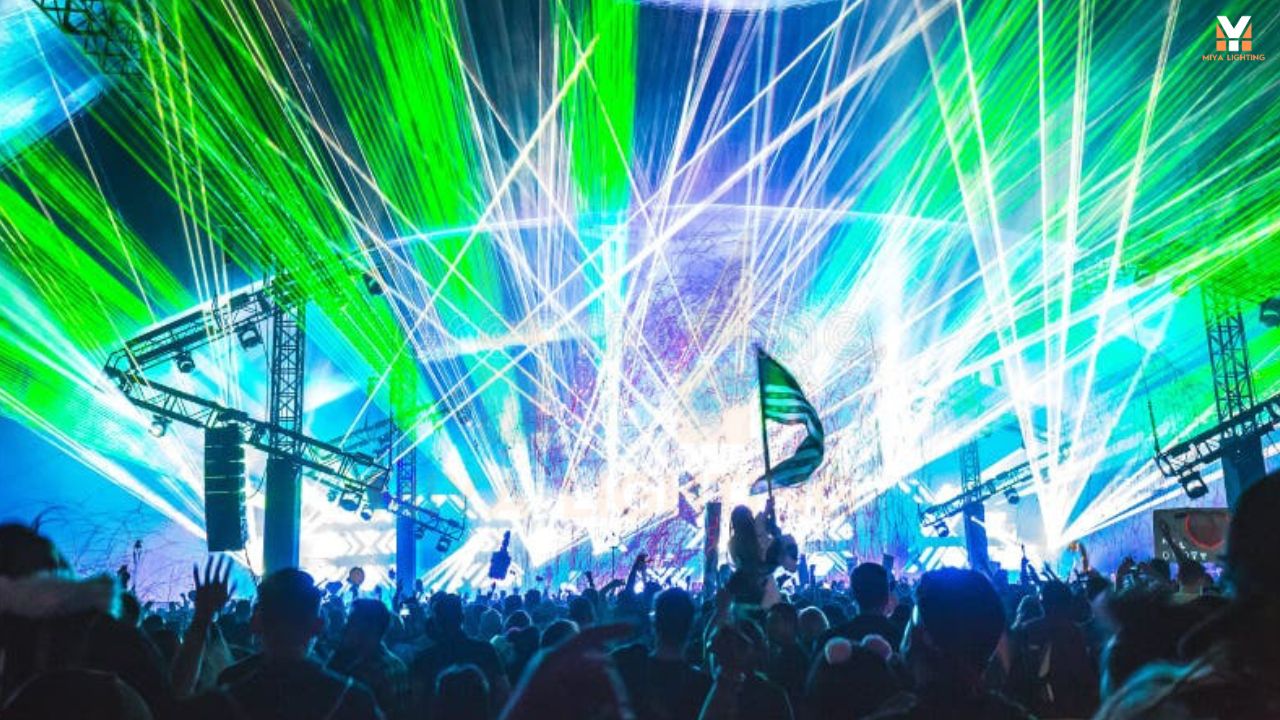
Every great concert tells a story through sound and light working together. Quiet moments build tension, while powerful drops release energy across the stage. The best lasers for concert lighting give creators the ability to shape those moments visually, turning music into movement and atmosphere.
Today, concert lasers are no longer reserved for massive tours alone. From club shows and DJ events to outdoor festivals, lasers for concerts have become a core part of modern stage production. They create sharp beams, rich colors, and dynamic motion that traditional fixtures simply cannot achieve.
At MIYA, we design concert laser lights for real-world use—DJs, performers, event organizers, and creators who want professional results without unnecessary complexity. This guide focuses on what truly matters when choosing a concert laser, helping you build a lighting setup that looks impressive, runs reliably, and fits your venue.
Why Concert Lasers Matter in Live Performances
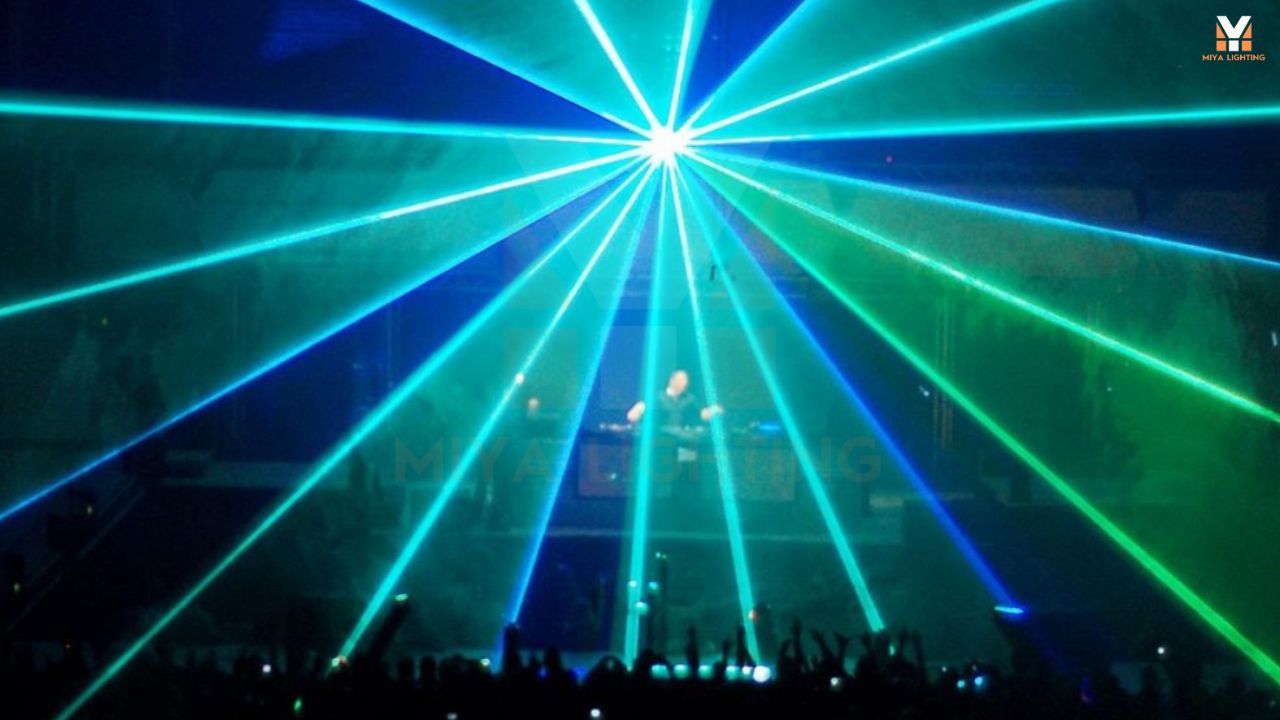
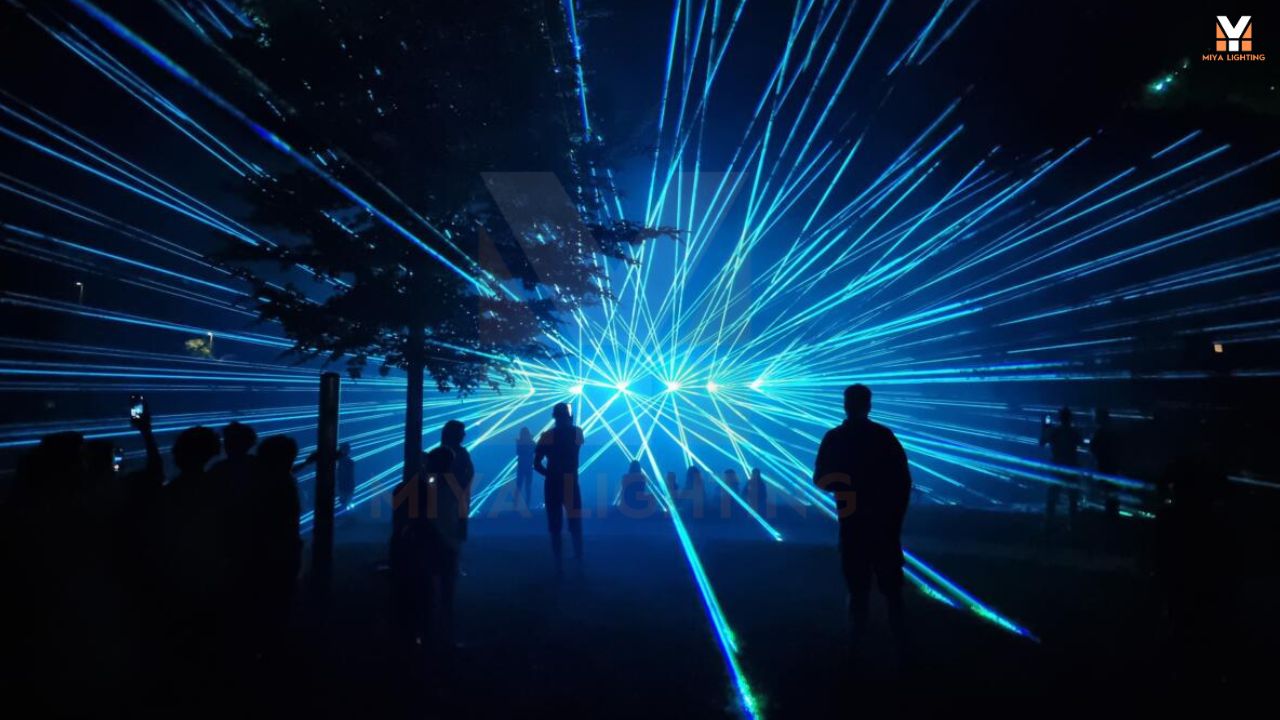
Unlike conventional stage fixtures, concert laser lights project focused beams that cut through the air. When combined with haze or fog, these beams become fully visible, creating immersive laser lighting effects that fill the entire venue.
In live shows, a well-programmed music laser light system does more than decorate the stage. Music lasers respond to rhythm, accent transitions, and visually translate sound into motion. When done right, the music laser feels like part of the performance rather than an add-on.
This connection between sound and visuals is why lasers play such a major role in today’s concert light show designs, especially in electronic music, pop tours, and large-scale events.

What to Look for in the Best Lasers for Concert Lighting
Choosing the right concert laser isn’t about chasing the biggest number on a spec sheet. Real-world performance depends on how the laser behaves during long shows, fast music, and changing environments.
Brightness, Power, and Visibility
Brightness determines whether laser light effects remain visible across large spaces or outdoor stages. Higher-power concert lasers produce beams that stay sharp and intense over long distances.
Smaller venues can rely on lower-power systems, while large festivals and open-air shows usually require higher-output concert laser lights to compete with ambient light.
Color Performance and Mixing
Most professional lasers lights use RGB color systems. High-quality lasers blend red, green, and blue smoothly, creating vibrant tones and clean transitions.
Good color mixing is essential for mood control—soft gradients for emotional moments and bold colors for high-energy drops. This is a defining factor in the best concert light shows audiences remember.

Control, Sync, and Programming
Modern lasers for concerts must integrate smoothly with other lasers and lights on stage. DMX remains the industry standard, allowing lasers to sync with moving heads, strobes, and LED walls.
Many setups also benefit from app or software control, especially for mobile crews. Reliable control turns a laser into a responsive light show machine rather than a static effect.
Cooling, Durability, and Outdoor Use
Concerts often run for hours, and lasers generate heat. Without proper cooling, brightness can drop or systems may shut down mid-show.
For outdoor events, durability becomes critical. Weather-resistant designs protect the light show device from rain, dust, and humidity—especially important for festivals and permanent installations.

A Real-World Example: MIYA MY2-A Series Outdoor Laser Projector
To see how these requirements come together in practice, it helps to look at a laser built specifically for live events.
The MIYA MY2-A Series Outdoor Stage Laser Projector is designed for professional laser light concert environments where reliability and flexibility matter. Available in 3W, 5W, 8W, 10W, and 12W versions, the MY2-A Series scales easily from club shows to large outdoor stages.
Its IP65 waterproof design makes it a dependable choice for outdoor concerts and festivals, where weather conditions can change quickly. For operators running rave laser machine setups or touring productions, this level of protection removes a major concern.
Control flexibility is another advantage. The MY2-A Series supports DMX, ILDA, auto, and sound modes, making it easy to integrate with existing rigs. For faster setups, it can also be operated via the LightELF app, turning the laser into a simple, intuitive light show device without requiring a console.
Visually, the laser delivers true RGB analog modulation, producing smooth color transitions and powerful beam output. The 40Kpps scanning system ensures sharp animation, clean text, and logo projection—essential for high-impact concert laser lights.
Built with professional cooling and a compact, durable housing, the MY2-A Series works well for outdoor events, club lighting, holiday displays, and permanent installs. At a regular price of $1,080, it offers a balanced option for creators who want reliable performance without excessive complexity.
How to Set Up Concert Lasers for Maximum Impact
Smart Placement
Proper placement dramatically affects how concert lasers perform. Front-mounted lasers highlight performers, side-mounted units add depth, and rear placement creates large aerial structures.
Mounting lasers around 10–15 feet above the stage generally provides the best balance of coverage and safety. Balanced placement ensures the laser light concert feels immersive rather than overwhelming.
Programming for Music and Movement
Effective programming begins with simplicity. Start with slower movements and basic color changes to establish rhythm.
As confidence grows, layer faster motion, beam splitting, and synchronized cues that follow the structure of the music. Saving presets allows instant transitions during live performances, transforming the system into a responsive light show machine.

Laser Safety in Concert Environments
Laser effects bring excitement, but safety is essential. Beams should always stay above audience eye level to avoid direct exposure.
Modern concert laser lights often include scan-fail protection that shuts down the laser if scanning stops unexpectedly. Regulations vary by region, so always check local rules before operating high-powered systems.
Responsible operation keeps your laser light effects safe, legal, and professional.

Choosing Lasers by Venue Size
Small clubs benefit from compact concert lasers that add motion without overpowering the audience.
Medium venues allow layered setups combining lasers and moving heads.
Large venues and outdoor shows require high-output, weather-resistant lasers for concerts with long throw distance.
In all cases, the goal is the same: a cohesive concert light show where lasers and music work together.

Final Thoughts
The best lasers for concert lighting aren’t just about brightness. They’re about control, durability, and how well they integrate with sound and stage design.
When chosen and programmed correctly, concert lasers turn performances into immersive experiences audiences remember. With reliable options like the MIYA MY2-A Series, creators can focus less on technical limitations and more on delivering unforgettable shows.
From club nights to festival stages, lasers continue to define what modern live entertainment looks and feels like.

Leave a comment
This site is protected by hCaptcha and the hCaptcha Privacy Policy and Terms of Service apply.