
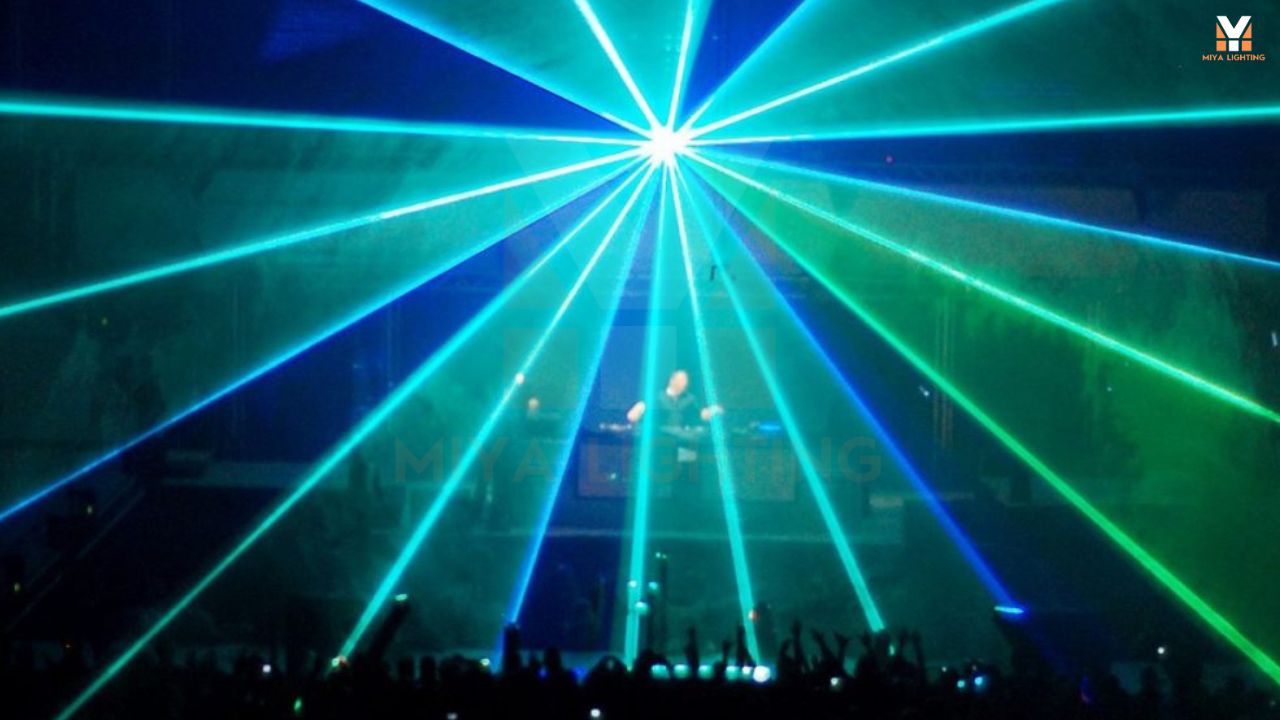
Laser stage lighting has become one of the most popular ways to upgrade parties, DJ performances, home stages, and small events. Clean beams, rich colors, and moving laser effects can instantly turn an ordinary space into a real show environment. But while many people focus on laser wattage or effects, the laser stage lighting power supply is often overlooked.
At MIYA, we regularly hear from customers who love their laser stage lighting but experience issues caused by unstable or mismatched power. Flickering beams, random resets, overheating, or reduced brightness are all common signs that the power supply for laser lights isn’t doing its job properly.
This guide is written for everyday users who want better results from their laser lights. It explains how a proper laser lighting power supply affects performance, safety, and lifespan—without technical jargon or engineering talk.
Why a Good Power Supply Is Essential for Laser Stage Lighting
Laser stage lighting relies on steady electrical input to work correctly. Unlike simple decorative lights, lasers are sensitive to voltage changes and power fluctuations. When the stage laser power is not delivered consistently, performance drops quickly.
One of the first issues users notice is uneven brightness. If the laser stage lighting power supply cannot maintain stable output, laser beams may flicker or lose intensity. Instead of smooth, professional effects, the lighting feels unreliable.
Heat management is another critical factor. Laser stage lighting naturally produces heat, especially during long shows. A low-quality power supply for laser lights can increase internal stress, leading to higher temperatures and shorter component life.
Choosing the right power supply protects your investment and helps your laser stage lighting perform the way it was designed to—bright, stable, and safe.

Understanding Voltage and Wattage for Laser Lighting Power
Before selecting a laser projector power supply, it’s important to understand voltage and wattage.
Most laser stage lighting sold in the U.S. operates on 110V, and many modern units support 110V–240V wide voltage input. Always confirm compatibility before connecting your system.
Wattage tells you how much power the laser consumes. When choosing a power supply for laser stage lighting, it’s best to allow extra capacity. For example, if your laser uses 120 watts, a power supply rated for 150 watts or more will provide better stability and reliability.
If you plan to run multiple laser lights, always calculate the total load. Overloading a laser stage lighting power supply is one of the most common causes of failure.
AC vs. DC Power Supplies for Laser Stage Lighting
Most laser stage lighting systems use AC power, drawing electricity directly from wall outlets. This is the most common and convenient option for DJs, parties, and events.
DC power supplies are typically used for battery-powered or portable systems and are less common in traditional stage lighting setups. For most users, a properly rated AC laser lighting power supply is the simplest and most reliable choice.

Safety Features Every Laser Power Supply Should Have
When dealing with laser stage lighting, safety should never be optional. A quality power supply for laser lights includes built-in protection features that prevent damage and reduce risk.
Overload protection helps prevent failure when too much power is drawn. Short-circuit protection shuts the system down safely if wiring problems occur. Thermal protection prevents overheating during long operating sessions.
These features work silently in the background but play a major role in keeping your laser stage lighting power supply dependable.
A Real-World Example: MIYA MY1-A8E Laser Projector
To see how power supply choice affects real performance, let’s look at a popular MIYA product.
The MIYA MY1-A8E RGB Professional Laser Projector is designed for stage and event lighting where reliability matters. It’s available in 3W, 5W, 8W, 10W, and 12W versions, all using a 40K scanning system.
The 10W model delivers true 10W+ RGB output, producing brighter beams than many standard lasers. When paired with a properly matched laser projector power supply, the MY1-A8E maintains consistent brightness and smooth effects even during long events.
Power stability is especially important for beam quality. The MY1-A8E uses a compressed red diode with approximately 1mrad divergence, creating sharper, more defined beams. Clean power allows this precision beam control to perform at its best.
The built-in advanced cooling system with ETC temperature control works closely with the laser stage lighting power supply to keep temperatures stable and extend product lifespan.
Safety features such as a key lock, scan-fail protection, safety shutter, and emergency stop meet FDA standards, making the MY1-A8E suitable for professional and home use. These features depend on reliable power to function correctly.
With a rugged aluminum housing and APP control, the MY1-A8E is ideal for DJs, rentals, and home setups. At $980, it offers professional performance with consumer-friendly usability—especially when paired with the right power supply.
How to Choose the Best Power Supply for Your Setup
Choosing the right laser stage lighting power supply depends on how you plan to use your lights.
For home parties or small rooms, a single high-quality power supply matched to your laser’s wattage is usually enough. Quiet operation and stable output are key.
For DJs and mobile setups, durability matters more. Strong connectors and well-insulated cables help prevent accidental power loss during setup or transport.
For larger setups, spreading the load across multiple outlets or using a power distribution unit improves stability and safety.
Maintaining Your Laser Lighting Power Supply
Keeping your power supply for laser lights in good condition is simple but important.
Dust buildup can restrict airflow and increase heat. Regular cleaning helps maintain proper ventilation.
Check power cables for damage or loose connections. Faulty cables can cause intermittent power loss and affect laser performance.
Before important events, test your full setup. Let the laser stage lighting run for a while and confirm that the laser lighting power supply stays cool and stable.

Common Mistakes to Avoid
Using cheap or generic adapters that don’t meet specifications is a common mistake. These often fail under continuous load.
Overloading outlets is another issue. Even if each laser works fine alone, combined loads can overwhelm a power source.
Environmental conditions also matter. Poor ventilation, humidity, or outdoor use increase demands on the laser stage lighting power supply.
Final Thoughts
A reliable laser stage lighting power supply is one of the most important parts of any laser setup. Stable power keeps beams bright, colors accurate, and systems running safely.
Whether you’re using a compact home laser or a professional unit like the MIYA MY1-A8E, choosing the right power supply for laser stage lighting ensures better performance and longer lifespan.
With MIYA laser stage lighting and a solid power foundation, you’re not just powering lights—you’re powering the entire experience.

Leave a comment
This site is protected by hCaptcha and the hCaptcha Privacy Policy and Terms of Service apply.