
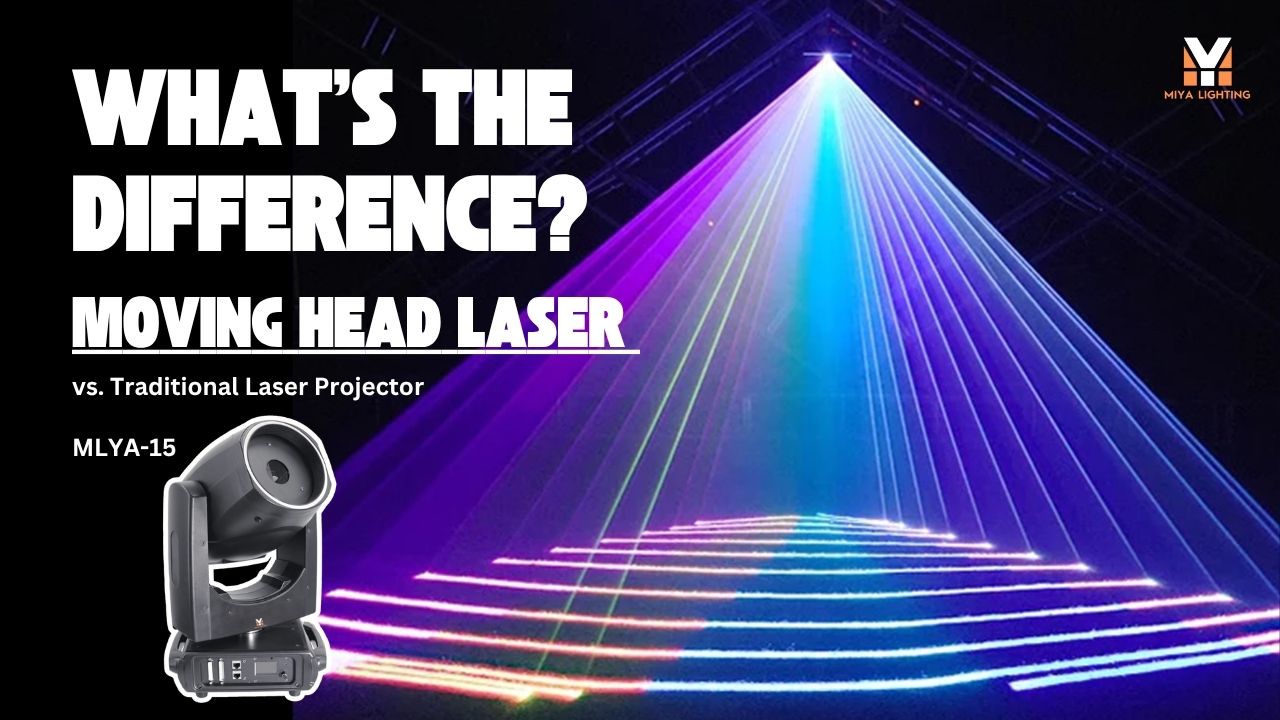
If you're upgrading the lighting for a nightclub, DJ setup, wedding, or live stage, you may be deciding between a moving head laser and a traditional laser projector.
Both can create sharp light beam effects, colorful patterns, graphics, and eye-catching aerial looks, but they don't work in exactly the same way. The biggest difference is simple: a traditional laser projector stays in a fixed position, while a moving head laser light can physically pan and tilt during the show.
So which one should you buy? It depends on the experience you want to create.
What Is a Traditional Laser Projector?
A traditional laser light projector uses internal high-speed scanners to move the laser beam and create patterns, graphics, animations, and aerial effects.
The effect moves, but the projector itself usually stays in one position.
That makes a traditional projector a strong choice when you have a specific projection area. For example, you may want to display a logo on a wall, run animation on a stage backdrop, or build a carefully positioned laser show.
Once the projector is aligned, it can remain aimed at the same zone throughout the performance.
For graphics, logos, and precise projection, that stability is often an advantage.

What Makes a Moving Head Laser Different?
A moving head laser light combines laser projection with the motorized movement found in professional moving head lights.
Inside the fixture, the scanner creates the laser effect. At the same time, the entire moving head can physically pan and tilt.
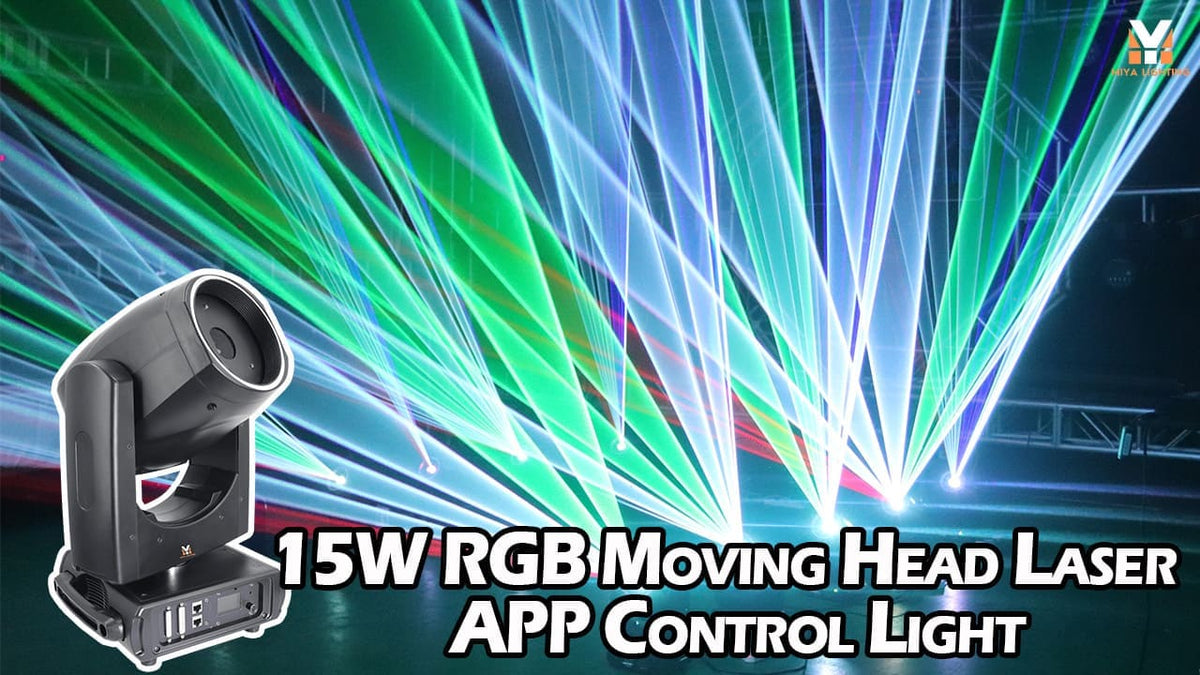
The MIYA 15W RGB Moving Head Laser Light offers 540° pan and 270° tilt with 16-bit precision. Its 20Kpps scanning system creates patterns and graphics, while the motorized head changes the direction of the complete projection.
In simple terms:
The scanner creates the light beam effect. The moving head changes where the effect goes.
This is what gives a laser moving head light more directional flexibility than a standard fixed projector.
Moving Head Laser vs. Laser Projector
| Feature | Moving Head Laser | Traditional Laser Projector |
|---|---|---|
| Physical Pan/Tilt | Yes | Usually No |
| Laser Scanning | Yes | Yes |
| Change Projection Direction | Yes | Fixed housing |
| Graphics & Patterns | Yes | Yes |
| Dynamic Stage Movement | Excellent | More limited |
| Fixed Logo Projection | Good | Excellent |
| DJ & Club Shows | Excellent | Excellent |
| Precise Fixed Projection | Good | Excellent |
Neither option is automatically better. They are designed for different jobs.
Why Moving Head Movement Matters
Traditional moving heads are already popular in club and stage lighting because they can reposition a beam, spot, or wash around the venue.
A moving laser applies the same idea to laser effects.
Instead of keeping the entire projection facing one direction, the laser light moving head can reposition during the show. This makes it possible to create more varied stage looks and change the direction of the laser effect as the music changes.
That is the main difference between a fixed projector and a moving laser light projector.

Why DJs and Clubs May Prefer a Moving Head Laser
Imagine you're running a DJ set in a nightclub.
With a traditional laser projector, your effects are normally designed around a fixed projection zone.
A moving head laser light adds physical movement to the show.
The laser can start in one controlled position, then the head can reposition as the music changes. Combined with haze, DJ moving head lights, washes, strobes, and other club lighting, this creates a more layered visual experience.
The MIYA model delivers true 15W RGB output with analog modulation, producing strong colors and smooth color mixing. Its adjustable 0.5°–10° beam angle also gives you more flexibility when shaping different effects.
For DJs already using moving head DJ lights, the laser adds something those fixtures cannot reproduce: the sharp visual character of a real laser beam combined with physical pan and tilt movement.
Moving Head Lights and Laser Lights: Different Jobs
A professional lighting rig often uses several fixture types together.
Professional moving head lights may create spots, washes, or conventional beam effects. LED fixtures handle color and ambient lighting. Strobes add short bursts of intensity.
A moving laser light adds thin, sharp laser lines, graphics, and aerial effects.
This is why a laser moving head should not necessarily replace your existing moving heads stage lights.
Instead, it works alongside them.
A typical DJ or club setup might combine:
- DMX moving head lights for color and movement
- Wash lights for room coverage
- Strobes for high-energy moments
- A moving head laser for sharp RGB laser effects
The result feels much more complete than relying on one type of stage light.

What About Graphics, Logos, and Animations?
This is where a traditional laser projector may still be the smarter choice.
If you want to keep a company logo perfectly positioned on a wall, display graphics on a fixed screen, or build animation around one precise projection surface, you don't necessarily need the projector to physically move.
A fixed professional laser can make setup easier for those applications.
A laser moving light can also create patterns and graphics, but its biggest advantage is physical movement.
So if your priority is:
logos, fixed graphics, animation, or precise projection
a traditional laser projector may be the better choice.
If your priority is:
moving beams, changing projection zones, and dynamic stage movement
a moving head laser light becomes much more interesting.
Wedding and Event DJs: More Flexibility from One Fixture
Professional wedding DJs and event companies work in different venues every week.
One weekend may be a ballroom. The next could be a nightclub-style reception or an indoor event venue.
A moving laser gives operators more flexibility to adapt to different layouts.
During a reception, conventional moving heads lights and wash fixtures can provide ambient event lighting. Once the dance floor opens, the laser adds sharper RGB effects and more dramatic movement.
For DJs already running DJ lights moving heads, adding a moving laser creates another visual layer without changing the entire lighting setup.

APP, DMX or ILDA? You Can Grow Into the System
One advantage of the MIYA moving head laser is that you don't need to start with the most complicated control method.
For simple setups, it supports APP, Auto, and Sound Active modes.
Want to integrate it with DMX moving head lights, washes, and strobes? Use DMX512.
Building a more advanced laser show? The fixture also supports ILDA control.
This means the same product can work for a mobile DJ who wants simple operation and a more experienced operator building a professional stage system.
Live Stage and Concert Use
On a live stage, stage lights moving heads may already provide conventional beam, spot, and wash movement.
Adding a moving laser light gives the lighting designer another type of visual effect.
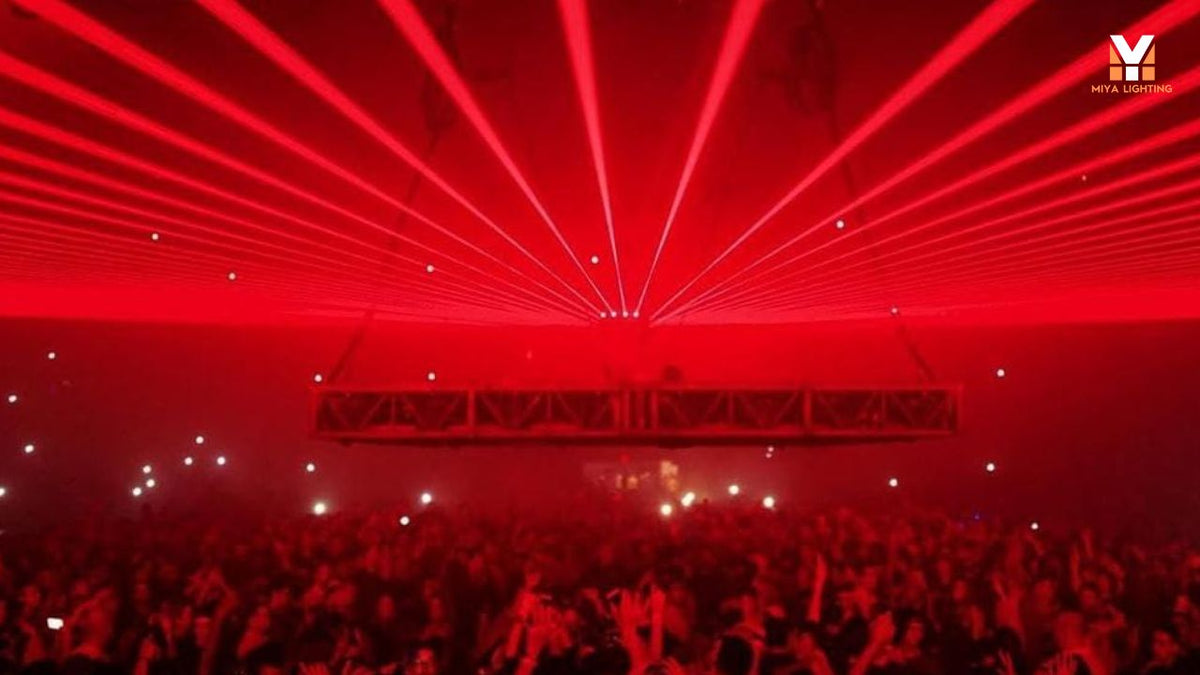
During a concert, the laser can create narrow aerial lines, patterns, and colorful effects while the entire head changes direction between cues.
For bands, electronic performers, DJs, and small concert productions, this can create a stronger visual contrast between the laser and the rest of the stage lighting.
The laser doesn't need to do everything.
It simply needs to do something your other moving lights cannot.
What About Cheap Moving Head Lights?
Lower-priced or cheap moving head lights can be useful for basic parties, smaller venues, or beginners building their first rig.
But they should not be compared directly with a 15W professional moving head laser.
A standard moving head light may use LEDs to create a beam or wash. A laser moving head uses an actual laser source, scanning system, and more specialized control options.
So when comparing products, don't look at price alone.
Consider what visual effect you actually need.
If you only want basic moving color, a conventional beam moving head light may be enough.
If you want sharp RGB laser beams, graphics, scanning effects, and moving-head direction control, a professional moving head laser is a very different tool.

Which One Should You Buy?
Choose a traditional laser projector if you mainly want:
- Logos and graphics
- Fixed projection zones
- Animation
- Precise positioning
- Dedicated programmed laser shows
Choose a moving head laser light if you mainly want:
- Physical pan and tilt
- Changing projection directions
- Dynamic DJ and club effects
- More stage movement
- Integration with professional moving head lights
- APP, DMX, and ILDA flexibility
The important question isn't, “Which laser is better?”
It's, “What do I want the laser to do?”
Is the MIYA 15W Moving Head Laser Right for Your Setup?
If you're looking for a fixed projector primarily for logos or graphics, a traditional laser projector may be the more practical choice.
But if you're building a nightclub, DJ, wedding, or live-stage system and want the laser itself to move with the show, the MIYA 15W RGB Moving Head Laser Light offers a different level of creative flexibility.
With 15W RGB output, 20Kpps scanning, 540°/270° movement, APP control, DMX512, ILDA, and 300+ effects, it combines the sharpness of a professional laser projector with the movement people expect from modern moving head lights.
For the right setup, that's the real reason to choose a moving head laser:
you're not just moving the laser beam—you’re giving the entire laser show room to move.

Leave a comment
This site is protected by hCaptcha and the hCaptcha Privacy Policy and Terms of Service apply.